Summary

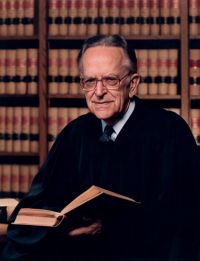
Portrait of Harry Blackmun Harry Blackmun Webster v. Reproductive Health Services… (1989)

In a Nation that cherishes liberty, the ability of a woman to control the biological operation of her body and to determine with her responsible physician whether or not to carry a fetus to term must fall within that limited sphere of individual autonomy that lies beyond the will or the power of any transient majority. This Court stands as the ultimate guarantor of that zone of privacy, regardless of the bitter disputes to which our decisions may give rise. In Roe, and our numerous cases reaffirming Roe, we did no more than discharge our constitutional duty.
Source: Wikisource

Portrait of Harry Blackmun Harry Blackmun Webster v. Reproductive Health Services… (1989)

Of the aspirations and settled understandings of American women, of the inevitable and brutal consequences of what it is doing, the tough-approach plurality utters not a word. This silence is callous. It is also profoundly destructive of this Court as an institution. To overturn a constitutional decision is a rare and grave undertaking. To overturn a constitutional decision that secured a fundamental personal liberty to millions of persons would be unprecedented in our 200 years of constitutional history.
Source: Wikisource

Portrait of Harry Blackmun Harry Blackmun Webster v. Reproductive Health Services… (1989)

The plurality opinion is filled with winks, and nods, and knowing glances to those who would do away with Roe explicitly, but turns a stone face to anyone in search of what the plurality conceives as the scope of a woman's right under the Due Process Clause to terminate a pregnancy free from the coercive and brooding influence of the State. The simple truth is that Roe would not survive the plurality's analysis, and that the plurality provides no substitute for Roe's protective umbrella.
Source: Wikisource

Get perspective with Kwize: daily news enlightened by great literature