Summary

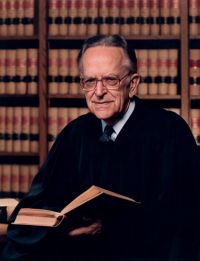
Portrait of Harry Blackmun Harry Blackmun Planned Parenthood of Central Missouri v… (1976)

But it is difficult to believe that the goal of fostering mutuality and trust in a marriage, and of strengthening the marital relationship and the marriage institution, will be achieved by giving the husband a veto power exercisable for any reason whatsoever or for no reason at all. Even if the State had the ability to delegate to the husband a power it itself could not exercise, it is not at all likely that such action would further, as the District Court majority phrased it, the "interest of the state in protecting the mutuality of decisions vital to the marriage relationship."
Source: Wikisource

Portrait of Harry Blackmun Harry Blackmun Planned Parenthood of Central Missouri v… (1976)

Clearly, since the State cannot regulate or proscribe abortion during the first stage, when the physician and his patient make that decision, the State cannot delegate authority to any particular person, even the spouse, to prevent abortion during that same period.
We are not unaware of the deep and proper concern and interest that a devoted and protective husband has in his wife's pregnancy and in the growth and development of the fetus she is carrying.
Source: Wikisource

Portrait of Harry Blackmun Harry Blackmun Planned Parenthood of Central Missouri v… (1976)

Wade the Court concluded that the "right of privacy, whether it be founded in the Fourteenth Amendment's concept of personal liberty and restrictions upon state action, as we feel it is, or, as the District Court determined, in the Ninth Amendment's reservation of rights to the people, is broad enough to encompass a woman's decision whether or not to terminate her pregnancy."
Source: Wikisource

Get perspective with Kwize: daily news enlightened by great literature