Summary

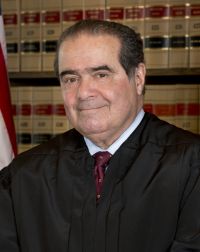
Portrait of Antonin Scalia Antonin Scalia Wyoming v. Oklahoma — Dissenting Opinion

Today, however, when the coal companies with sales allegedly affected by the Oklahoma law have, for whatever reason, chosen not to litigate, the Court sees fit, for the first time, to recognize a State's standing to bring a negative Commerce Clause action on the basis of its consequential loss of tax revenue. That is a major step, and I think it is wrong. Even if it were correct, however, summary judgment that Wyoming suffered consequential loss of tax revenue in the present case would be unjustified. I would deny Wyoming's motion for summary judgment and grant Oklahoma's.
Source: Wikisource

Portrait of Antonin Scalia Antonin Scalia Wyoming v. Oklahoma — Dissenting Opinion

When courts abolish such limitations and require, as our opinion does today, nothing more than a showing of de facto causality, exposure to liability becomes immeasurable and the scope of litigation endless. If today's decision is adhered to, we can expect a sharp increase in state-against-state Commerce Clause suits; and if its rejection of the zone-of-interests test is applied logically, we can expect a sharp increase in all constitutional litigation.
Source: Wikisource

Portrait of Antonin Scalia Antonin Scalia Wyoming v. Oklahoma — Dissenting Opinion

To establish injury, however, Wyoming had to show not merely that the statute caused Oklahoma sales to be lost, but that it prevented Wyoming "severances" of coal from occurring. Wyoming does not tax sales of coal to Oklahoma utilities; it taxes severances. The loss of a particular Oklahoma sale would not hurt Wyoming's treasury at all unless (1) the coal that was the subject of that sale was not severed to be sold elsewhere, or (2) if it was severed to be sold elsewhere, that latter sale (and severance) would have occurred even if the Oklahoma sale had been made.
Source: Wikisource

Get perspective with Kwize: daily news enlightened by great literature