Summary

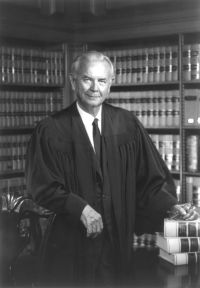
Portrait of William J. Brennan William J. Brennan Allen v. Wright — Dissenting Opinion

We do not agree with the District Court in its analysis of the legal consequences of this uncertainty, for the Constitution does not permit the State to aid discrimination even when there is no precise causal relationship between state financial aid to a private school and the continued wellbeing of that school. A State may not grant the type of tangible financial aid here involved if that aid has a significant tendency to facilitate, reinforce, and support private discrimination.
Source: Wikisource

Portrait of William J. Brennan William J. Brennan Allen v. Wright — Dissenting Opinion

Finally, if the "history of school desegregation in Mississippi at the time of the Coit litigation" is at all relevant to the standing inquiry, it weighs in favor of allowing the respondents to maintain their present lawsuit. From the perspective of black children attending desegregating public schools, and according to the allegations included in their complaint, current IRS policies toward racially discriminatory private schools represent a substantial continuation of the onerous history of school desegregation in the affected school districts.
Source: Wikisource

Portrait of William J. Brennan William J. Brennan Allen v. Wright — Dissenting Opinion

In Norwood v. Harrison, 413 U.S. 455 (1973) , for example, we considered a Mississippi program that provided textbooks to students attending both public and private schools, without regard to whether any participating school had racially discriminatory policies. In declaring that program constitutionally invalid, we noted that
"a state may not induce, encourage or promote private persons to accomplish what it is constitutionally forbidden to accomplish."
Source: Wikisource

Get perspective with Kwize: daily news enlightened by great literature