Summary

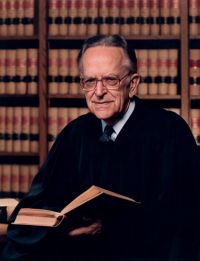
Portrait of Harry Blackmun Harry Blackmun Lujan v. Defenders of Wildlife…

The Court never has questioned Congress' authority to impose such procedural constraints on executive power. Just as Congress does not violate separation of powers by structuring the procedural manner in which the Executive shall carry out the laws, surely the federal courts do not violate separation of powers when, at the very instruction and command of Congress, they enforce these procedures.
To prevent Congress from conferring standing for "procedural injuries" is another way of saying that Congress may not delegate to the courts authority deemed "executive" in nature.
Source: Wikisource

Portrait of Harry Blackmun Harry Blackmun Lujan v. Defenders of Wildlife…

When a plaintiff, however, seeks to preserve jurisdiction in the face of a claim of nonredressability, the plaintiff is not free to point to the involvement of nonparty agencies in subsequent parts of the litigation. The plurality does not explain why the street runs only one way — why some actions of the Executive Branch subsequent to initiation of a lawsuit are cognizable for jurisdictional purposes, but others simply are not.
Source: Wikisource

Portrait of Harry Blackmun Harry Blackmun Lujan v. Defenders of Wildlife…

Were the Court to apply the proper standard for summary judgment, I believe it would conclude that the sworn affidavits and deposition testimony of Joyce Kelly and Amy Skilbred advance sufficient facts to create a genuine issue for trial concerning whether one or both would be imminently harmed by the Aswan and Mahaweli projects. In the first instance, as the Court itself concedes, the affidavits contained facts making it at least "questionable" (and therefore within the province of the factfinder) that certain agency-funded projects threaten listed species.
Source: Wikisource

Get perspective with Kwize: daily news enlightened by great literature