Summary

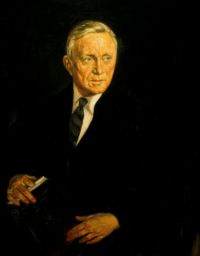
Portrait of William O. Douglas William O. Douglas United States v. Stewart — Opinion of the Court

But aside from the fact that those statements are hardly more specific than the statute itself, they cannot be accorded the weight of uniform and long standing administrative treatment. [22] There was no authority for the Board to make representations that capital gains were or were not tax exempt. That administrative function resided only in the Treasury. An officer or agency of the United States to whom no administrative authority has been delegated cannot estop the United States even by an affirmative undertaking to waive or surrender a public right.
Source: Wikisource

Portrait of William O. Douglas William O. Douglas United States v. Stewart — Opinion of the Court

The purpose of the amendment may well have been to clarity the doubtful and uncertain status of capital gains which were not covered by the Committee's recommendation. There is no clear and convincing evidence that it was designed to change existing law, so far as these other categories of capital gains were concerned. But even if a contrary implication were to be assumed, it would not override so belatedly the clear inference, based on a long series of revenue acts exempting only interest, that capital gains were taxable.
Source: Wikisource

Get perspective with Kwize: daily news enlightened by great literature