Summary

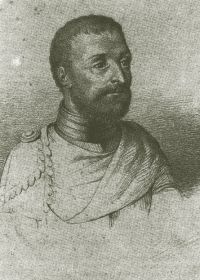
Portrait of Antonio Pigafetta Antonio Pigafetta The Philippine Islands, 1493-1898…

On Easter Sunday, the natives are deeply impressed by the mass that is celebrated ashore, and the cross which is planted in the highest part of the island, and which they promise to adore.
The limited amount of food in Limasaua, which is used only as a place of recreation by the two kings, who go there to visit one another and hunt, leads Magalhães to seek a more abundant harbor. Among the places pointed out where food is abundant is the island of Cebú, and there Magalhães determines to go, “for so did his unhappy fate will.”
Source: Gutenberg

Portrait of Antonio Pigafetta Antonio Pigafetta The Philippine Islands, 1493-1898…

Next day Magallanes ordered the body of Mendoza taken ashore and had it quartered, and Mendoza cried as a traitor. On the seventh, he ordered Gaspar de Quesada beheaded and quartered with a like cry. That was done by Quesada’s own follower and sobresaliente, Luis de Molino, in order to save himself from hanging, for that sentence had been passed on him. Magallanes sentenced Juan de Cartagena and the lay priest, Pedro Sanchez de la Reina, who had been active in causing the men to mutiny, to be marooned in that country.
Source: Gutenberg

Portrait of Antonio Pigafetta Antonio Pigafetta The Philippine Islands, 1493-1898…

On Good Friday, Pigafetta and a companion visit the natives ashore, where they spend the night in the king’s palace, a typical Visayan house raised aloft on supports and thatched with nipa. Here the various ceremonies that he witnesses impress Pigafetta, and his companion, cast in coarser mould than he, becomes intoxicated. Pigafetta, always interested in [18] the language of the new peoples whom he meets, writes down certain of their words, whereat they are greatly astonished.
Source: Gutenberg

Get perspective with Kwize: daily news enlightened by great literature