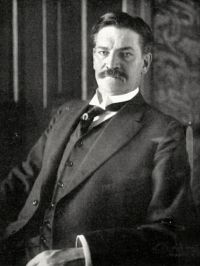
Archibald Gracie

Archibald Gracie

Summary

Portrait of Archibald Gracie Archibald Gracie The Truth about the Titanic (1913)

With never a realizing sense of being on the ocean, why should not one forget?—no motion, no noise of machinery, nothing suggestive of a [Pg 253] ship. Happy, laughing men and women constantly passing up and down those broad, strong staircases, and the music went on and the ship went on—nearer and nearer to its end. So short a life, so horrible a death for that great, great ship. What is a more stupendous work than a ship! The almost human pieces of machinery, yet a helpless child, powerless in its struggle with an almighty sea, and the great boat sank, fragile as a rowboat.
Source: Gutenberg

Portrait of Archibald Gracie Archibald Gracie The Truth about the Titanic (1913)

The life-preservers helped to keep us warm, but the night was bitter cold, and it grew colder and colder, and just before dawn, the coldest, darkest hour of all, no help seemed possible. As we put off from the Titanic never was a sky more brilliant, never have I seen so many falling stars. All tended to make those distress rockets that were sent up from the sinking ship look so small, so dull and futile. The brilliancy of the sky only intensified the blackness of the water, our utter loneliness on the sea.
Source: Gutenberg

Portrait of Archibald Gracie Archibald Gracie The Truth about the Titanic (1913)

Each one more fantastically chiselled than its neighbor. The floe glistened like an ever-ending meadow covered with new-fallen snow. Those same white mountains, marvellous in their purity, had made of the just ended night one of the blackest the sea has ever known. And near them stood the ship which had come in such quick response to the Titanic’s call for help. The man who works over hours is always the worthwhile kind, and the Marconi operator awaiting a belated message had heard the poor ship’s call for help, and we few out of so many were saved.
Source: Gutenberg

Get perspective with Kwize: daily news enlightened by great literature