Summary

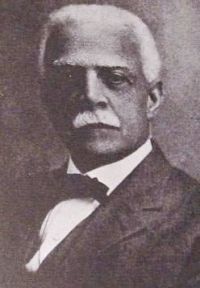
Portrait of Archibald Henry Grimké Archibald Henry Grimké William Lloyd Garrison, the Abolitionist

Garrison's forecast of the future, directly after the annexation of Texas, proved singularly correct. Never, as at that moment, had the slave-power seemed so secure in its ascendency, yet never, at any previous period, was it so near its downfall. Freedom had reached that darkest hour just before dawn; and this, events were speedily to make clear. If the South could have trammeled up the consequences of annexation, secure, indeed, for a season, would it have held its political supremacy in America? But omnipotent as was the slave-power in the Government, it was not equal to this labor.
Source: Gutenberg

Portrait of Archibald Henry Grimké Archibald Henry Grimké William Lloyd Garrison, the Abolitionist

Anti-slavery agents and lecturers kept pace with the anti-slavery societies. They began to preach, to remonstrate, to warn, entreat, and rebuke until their voices sounded like the roar of many waters in the ears of the people. Wherever there was a school-house, a hall, or a church, there they were, ubiquitous, irrepressible, a cry in the wilderness of a nation's iniquity. Anti-slavery tracts and periodicals multiplied and started from New York and Boston in swarms, and clouds, the thunder of their wings were as the thunder of falling avalanches to the guilty conscience of the country.
Source: Gutenberg

Portrait of Archibald Henry Grimké Archibald Henry Grimké William Lloyd Garrison, the Abolitionist

For the young reformer was evidently a firm believer in the divine right of his sex to rule in the world of politics. But as he grew taller and broader the horizon of woman widened, and her sphere embraced every duty, responsibility, and right for which her gifts and education fitted her. The hard and fast lines of sex disappeared from his geography of the soul. He perceived for a truth that in humanity there was neither male nor female, but that man and woman were one in work and destiny—equals in bearing the world's burden, equals in building the world's glory.
Source: Gutenberg

Get perspective with Kwize: daily news enlightened by great literature