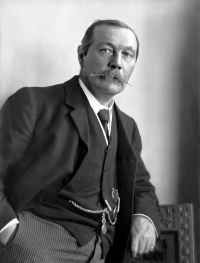
 Arthur Conan Doyle,
The Great Boer War — Chapter 21 Strategic Effects of Lord Roberts's March
(1900)
Arthur Conan Doyle,
The Great Boer War — Chapter 21 Strategic Effects of Lord Roberts's March
(1900)
“ One of these is the magnificent high railway bridge, already blown to ruins by the retreating Boers. Dead men or shattered horses do not give a more vivid impression of the unrelenting brutality of war than the sight of a structure, so graceful and so essential, blown into a huge heap of twisted girders and broken piers. Half a mile to the west is the road bridge, broad and old-fashioned. The only hope of preserving some mode of crossing the difficult river lay in the chance that the troops might anticipate the Boers who were about to destroy this bridge. ”
