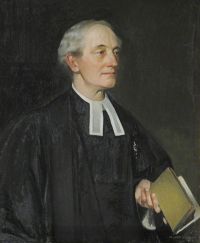
Arthur James Mason

Arthur James Mason

Summary

Portrait of Arthur James Mason Arthur James Mason Dictionary of National Biography (1901)

Archbishop Benson's was a personality of very large and varied gifts. He had the temperament of a poet and a dramatist, with swift insight and emotions at once profound and soon stirred. He was naturally sanguine, though, like other sanguine persons, liable to great depression. His was the very opposite temper to that which made Butler refuse the primacy of a 'falling church.' Benson showed 'no alacrity at sinking,' said a leader-writer in the 'Times,' looking back at the difficulties which would have drowned a weaker man in the first days at Wellington.
Source: Wikisource

Portrait of Arthur James Mason Arthur James Mason Dictionary of National Biography (1901)

The Reformation was shown to be not its beginning but a critical stage in its growth.'
While Benson thus spent himself for the good of the church at home, he bestowed more care upon the church abroad than any archbishop of Canterbury before him. He threw himself into the missionary work of the church not only with ardour and sagacity, but with a philosophic largeness of view. The founding of a new mission, like that to Corea for example, gave him profound delight. He guided the young church on the Niger through a most grave crisis.
Source: Wikisource

Portrait of Arthur James Mason Arthur James Mason Dictionary of National Biography (1901)

Many people considered the Welsh church indefensible, and held that the church in England would be the stronger for allowing it to be disestablished. The archbishop thought otherwise. The 'church congress' was held that year at Rhyl. Benson attended it. He made there the most memorable and effectual speech of his life. 'I come,' he said, 'from the steps of the chair of Augustine to tell you that by the benediction of God we will not quietly see you disinherited.' That speech marked the turn of the tide.
Source: Wikisource

Get perspective with Kwize: daily news enlightened by great literature