Arthur Oliver Wheeler

Arthur Oliver Wheeler

Summary

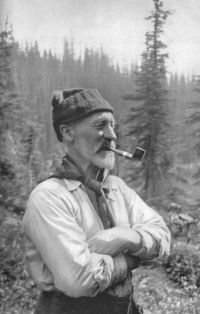
Portrait of Arthur Oliver Wheeler Arthur Oliver Wheeler The Selkirk Mountains (1912)

But to appreciate fully the magnificence of the spectacle it is necessary to study it; to see it under different aspects, in light, in shadow with the sun sparkling on its many ice-points, or covered by a soft mantle of fresh snow; to go up among its crevasses, to stand beside its seracs. to follow its snow-slopes to the sky-line and there gaze upon the dwarfed landscape below. Unless one is an expert mountaineer, it is not safe to go on the glacier or to travel across its névé without a Swiss guide.
Source: Wikisource

Portrait of Arthur Oliver Wheeler Arthur Oliver Wheeler The Selkirk Mountains (1912)

Did he then realize the length and great turnings of the mighty waterway whose first white companion he was from its fountain-head to its confluence with the ocean? If you read the history of the River and company with it by sun and stars for scarcely one hundred miles, you have strange feelings not unmingled with wonder and melancholy, when you come to its source. Dwellers in the Happy Valley strike their roots deep and love their River and Mountains as they love the flag.
Source: Wikisource

Portrait of Arthur Oliver Wheeler Arthur Oliver Wheeler The Selkirk Mountains (1912)

Above Rogers Pass, Bear Creek Valley widens out in a wild and interesting landscape. Great precipices descend sheer from Mt. Cheops and enormous masses of naturally quarried stone lie at its base; darkly wooded buttresses extend from the mountains to the north, silver cascades slip from great heights to the valley below. In the floor of the valley itself stand prodigious islands of rock, whole brotherhoods of spruce growing out of the scant soil on their summits.
Source: Wikisource

Get perspective with Kwize: daily news enlightened by great literature