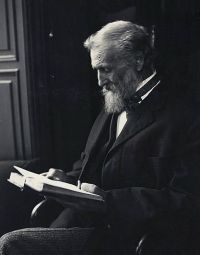
“ The widest crevasse that I could jump he would leap without so much as halting to take a look at it. The weather was now making quick changes, scattering bits of dazzling brightness through the wintry gloom; at rare intervals, when the sun broke forth wholly free, the glacier was seen from shore to shore with a bright array of encompassing mountains partly revealed, wearing the clouds as garments, while the prairie bloomed and sparkled with irised light from myriads of washed crystals. ”
Crevasse
Definition and stakes
A crevasse is a deep fissure in glaciers or ice sheets, formed by movement and pressure, often posing serious risks to mountaineers. Authors like John Muir captured its stark beauty and danger, while Apsley Cherry-Garrard underscored its life-threatening nature during polar expeditions.
George Edward Mannering emphasized its technical difficulties in alpine climbing, and others highlighted its symbolic role in stories of exploration. These diverse viewpoints illustrate the crevasse’s dual function as both a natural feature and a narrative element, reflecting human fragility and the overwhelming power of nature.
Quotes about “crevasse”
George Edward Mannering, With axe and rope in the New Zealand Alps… (1891)
“ The climbing was somewhat dangerous, mainly owing to the bad state of the snow, which would start away in avalanches, or give way on the edge of a crevasse just at the moment one put one's weight on to spring. At length we gained the highest rocks, which proved very bad going and seemed likely to bring us to a stand; but the leading man going up the last fifty feet alone, sent down a spare rope, making one end fast above, by whose assistance the second man followed in safety, the last man making the swags fast to the rope below to be hauled up. ”
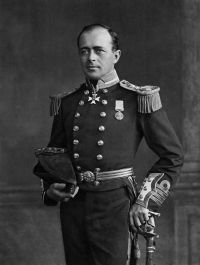
Robert Falcon Scott,
Scott's Last Expedition
(1913)
“ Then we started up a rise, and to our annoyance found ourselves amongst crevasses once more—very hard, smooth névé between high ridges at the edge of crevasses, and therefore very difficult to get foothold to pull the sledges. ”
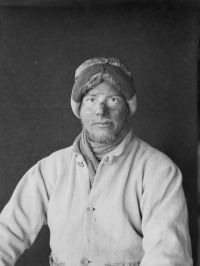
“ Some crevasses remain open for months or even years, and by the melting of their sides continue to increase in width long after the opening strain has ceased; while the sliver-bridges, level on top at first and perfectly safe, are at length melted to thin, vertical, knife-edged blades, the upper portion being most exposed to the weather ”
Various, The National Geographic Magazine…
“ The more rapid movement of the center is indicated by the form of the crevasses all the way down the rapid. After becoming straight they bow in the center and form semi-lunar gashes, widest in the center and curving up-stream at each extremity. Still farther down they become more and more bent in the center and at the same time greatly increased in breadth. ”
Apsley Cherry-Garrard,
The Worst Journey in the World
(1922)
“ Even under the ideal conditions of good light, warmth and no wind, crevasses are beastly, whether you are pulling over a level and uniform snow surface, never knowing what moment will find you dropping into some bottomless pit, or whether you are rushing for the Alpine rope and the sledge, to help some companion who has disappeared. ”
Samuel Hall Young,
Alaska Days with John Muir
“ Along a narrowing arm of the mountain, a deep canyon flumed a rushing torrent of icy water from a small glacier on our right. Then came moraine matter, rounded pebbles and boulders, and beyond them the glacier. Once a giant, it is nothing but a baby now, but the ice is still blue and clear, and the crevasses many and deep. And that day it had to be crossed, which was a ticklish task. A misstep or slip might land us at once fairly into the heart of the glacier, there to be preserved in cold storage for the wonderment of future generations. ”
Apsley Cherry-Garrard,
The Worst Journey in the World
(1922)
“ Sometimes a blizzard is a very welcome rest: after weeks of hard pulling, dragging yourself awake each morning, feeling as though you had only just gone to sleep, with the mental strain perhaps which work among crevasses entails, it is most pleasant to be put to bed for two or three days. You may sleep dreamlessly nearly all the time, rousing out for meals, or waking occasionally to hear from the soft warmth of your reindeer bag the deep boom of the tent flapping in the wind, or drowsily you may visit other parts of the world, while the drifting snow purrs against the green tent at your head. ”
Wilson's Tales of the Borders and of Scotland…
“ Kreutz and Crawley were in communication.'There is more than chance in that frightful appearance,' I heard Crawley say. 'And this calm too—it will never end. God have mercy on us! Is there no man that will undertake to sink the body? I cannot stand the gaze of these white balls. See! the face is directed towards me; and yet I did not do the deed, though I authorized it. Will no one save me from the glare of the grim avenger? I will give twenty gold pieces to the man who will remove it to the deep. ”
D. H. Lawrence,
Studies in Classic American Literature…
(1923)
“ While Crevecoeur is away in France his farm is destroyed, his family rendered homeless. So that the last letter laments bitterly over the war, and man's folly and inhumanity to man.But Crevecoeur ends his lament on a note of resolution. With his amiable spouse, and his healthy offspring, now rising in stature, he will leave the civilized coasts, where man is sophisticated, and therefore inclined to be vile, and he will go to live with the Children of Nature, the Red Men, under the wigwam. No doubt, in actual life, Crevecoeur made some distinction between the Indians who drank rum ... ”
E. M. Hull,
The shadow of the East
“ With a broken whisper Craven caught his frail burden closer, as though seeking by the strength and warmth of his own body to animate the fragile limbs lying so cold and lifeless in his arms, and he bent low over the pallid lips he craved and yet did not dare to kiss. ”
Oliver Goldsmith, The Vicar of Wakefield
“ Here I found a number of poor creatures, all in circumstances like myself, expecting the arrival of Mr Cripse, presenting a true epitome of English impatience. Each untractable soul at variance with fortune, wreaked her injuries on their own hearts: but Mr Cripse at last came down, and all our murmurs were hushed. He deigned to regard me with an air of peculiar approbation, and indeed he was the first man who for a month past talked to me with smiles. After a few questions, he found I was fit for every thing in the world. ”
MacGregor Jenkins, Bucolic Beatitudes (1925)
“ Duty summons in the form of some sound inaudible to human ears, some suspicious odor too delicate to disturb a human nostril, and he is up. Back in harness, recreated, rested, ready for any demand upon that marvelous supply of nervous energy. And a neurasthenic generation wonders at it, while Cerberus patiently tries to teach by actual practice the simplest rudiments of health to a stupid and inattentive class of grown-up dunces. ”
George Crabbe,
George Crabbe: Poems, Volume 1…
“ Yet still my days of grief I find;The former clouds' collected gloomStill sadden the reflecting mind;The soul, to evil things consign'd.Will of their evil some retain;The man will seem to earth inclined,And will not look erect again.380Thus, though elect, I feel it hard To lose what I possess'd before,To be from all my wealth debarr'd:—The brave Sir Eustace is no more.But old I wax and passing poor,Stern, rugged men my conduct view;They chide my wish, they bar my door,'Tis hard—I weep—you see I do.—Must you, my friends, no longer stay? ”
E. M. Hull,
The shadow of the East
“ His fingers clenched on the soft hat he held. “But it does not do at all,” she was saying, and the racking cough that accompanied her words struck through Craven's heart like a knife, “it is the expression that is wrong. If you look like that I can never believe that you are what you say you are. ”
Charles Creighton, A History of Epidemics in Britain…
“ The symptoms of scurvy, as he gives them, cover perhaps the one moiety of disease, and those of ague the other.Agues are of two sorts, curable and incurable; the curable are those that come in a common way of Providence, the incurable those that are sent more immediately from God in the way of special judgment, as instances adduced from Scripture show. What is an ague? Some think it is a strange thing, they know not what; the more ignorant think it is an evil spirit, but coming they know not whence. ”
Alfred Ainger, English Men of Letters: Crabbe
“ For even the village of trim gardens and cherished Bibles has its "slums," and on these slums Crabbe proceeds to enlarge with almost ferocious realism:— "Here, in cabal, a disputatious crew Each evening meet; the sot, the cheat, the shrew; Riots are nightly heard:—the curse, the cries Of beaten wife, perverse in her replies, While shrieking children hold each threat'ning hand, And sometimes life, and sometimes food demand; Boys, in their first-stol'n rags, to swear begin; And girls, who heed not dress, are skill'd in gin." ”
Johann David Wyss,
The family Robinson Crusoe
(1816)
“ What an ugly monster! cried Jack, as he stood over him: but far from being terrified by his ugliness, it only served to quicken my ardour:—one must always be glad to deliver the earth of such a monster.You would have something to do, my young Hercules, said I, tapping him on the shoulder; no animal is so common as the crab on the shores of the sea: they are of numerous kinds, and may be seen by millions, all equally ugly. This, if I mistake not, is distinguished by the name of the poet’s crab. ”
E. T. W. Hoffmann, Weird tales by E T W Hoffmann (1885)
“ They are like thin-skinned insects, which, as we watch the restless play of their muscles, seem to be misshapen, while nevertheless everything soon comes back into its proper form again. All that with us remains thought, passes over with Krespel into action. That bitter scorn which the spirit that is wrapped up in the doings and dealings of the earth often has at hand, Krespel gives vent to in outrageous gestures and agile caprioles. ”
George Crabbe,
George Crabbe: Poems, Volume 3…
“ Although our Squire was not a Solomon.I knew the Damsel; she was not a Ruth,And had been wild and wanton all her Youth.She from her Bible no Instruction took,But studied like a Dalilah to look;Till Grace forsook her, left to the ControulOf Evil Things that War against the Soul.—“But I am wandering. When a Man is old,His Words come slowly, for his Blood is cold; 70 And, the less time he has his Tale to tell,The longer he on every part will dwell. ”
Samuel Hopkins Adams,
The Unspeakable Perk
“ Miss Brewster complimented him. “I like seeing the wires of empire pulled. More, please.” “Perhaps you won’t like the next so well,” observed Carroll grimly. “There is bubonic plague here.” “Oh—ah!” protested Sherwen gently. “The suspicion of plague. Quite a different matter.” “Which usually turns out to be the same, doesn’t it?” inquired Mr. Brewster. “Perhaps. People disappear, and one is not encouraged to ask about them. But then people disappear for many causes in Caracuña. Politics here are somewhat—well—Philadelphian in method. But—there is smoke rising from behind Capo Blanco.” ”
F. Marion Crawford, Greifenstein
“ You are Rieseneck and I am Greifenstein, for all our lives, and our children will be Riesenecks and Greifensteins after us, if we marry. I would not lay such a curse upon any woman, much less upon one I love.’ ‘A curse is a purely conventional term, having no real meaning in life,’ replied Rex. ‘The reality is you yourself, your love and her love, whether you be the Emperor or Herr Schmidt. At least that is all the reality which can ever affect either of you, so far as marriage is concerned. ”
Wilson's Tales of the Borders and of Scotland…
“ That is the von thing only that troubles me.''If there is no wind,' said Crawley, 'to carry us out of the channel, there is none to bring any one to us.'At this moment, I thought they heard some movements, produced by a nervous trembling that came over me, and forced me to hold by a chair. Some whisperings followed. Kreutz went away, and Crawley entered. I had just time to retreat to the other side of the body of my husband. His manner was now that which was natural to him—harsh and repulsive. He ordered me peremptorily to the lower cabin. I had no power to resist, or even to speak ”
Charles Creighton, A History of Epidemics in Britain…
“ The Cromwellian Civil Wars, as we shall see, do indeed furnish many instances of plague, and some of typhus fever, in besieged or occupied towns; but, for the middle part of the fifteenth century, including the period of the wars of York and Lancaster, there is no good reason to suppose that fevers or other morbi miseriae, were rife among the common people, least of all among the peasantry. ”
“ As the rays of setting sun Light the sky with mellow beauty, aged sires, with heads of white, Tell the children why the curfew did not ring that one sad night. O’er the distant hills came Cromwell. Bessie saw him; and her brow, Lately white with sickening horror, glows with sudden beauty now. At his feet she told her story, showed her hands, all bruised and torn; And her sweet young face, so haggard, with a look so sad and worn, Touched his heart with sudden pity, lit his eyes with misty light. “Go! your lover lives,” cried Cromwell. “Curfew shall not ring to-night!” ”
Catherine Crowe, The Night-Side of Nature; Or, Ghosts and Ghost-Seers
“ About a week or ten days after this, Creswell came to my mother, one morning, and told her that all the French servants talked of going away, because there was a revenant in the house; adding that there seemed to be a strange story attached to the place, which was said, together with some other property, to have belonged to a young man, whose guardian, who was also his uncle, had treated him cruelly and confined him in an iron cage ”
F. Marion Crawford, The Ralstons
“ And Crowdie—with his woman’s eyes, his soft, clear voice, his delicate white hands, his repellent pallor, and wound-like lips—Katharine thought of neither man nor beast. Even in the midst of her dream of wild animals, he was Crowdie still, with a mysterious, indescribable, poisonous something in all his being which made it a suffering for her to touch his hand. To this something, whatever it might be, she preferred her father’s cruel avarice, her mother’s envy, heartless as it had been while it lasted. To it she would have preferred a drunkard’s trembling hand and lip. ”
F. Marion Crawford, The Ralstons
“ She felt sick and faint, and for a moment she knew that she could not get downstairs without falling. She felt that she was full of the perfume-loaded air she had breathed, that it clung to her like a blanket, and hindered her from drawing a full breath. She raised her left arm to her face mechanically, and smelled it. The stuff was full of the incense, and she threw her head back with parted lips, to draw in freshness if she could.She was so strong that she did not faint, but stood erect against the door-post until she could trust herself to walk. ”
Various, Punch, or the London Charivari…
“ Vainly has Crevelli raised a bulwark of lozenges against the Demon of Catarrh! Soreness will invade the throat, and noses run in every family, seeming to be infected with a sentimental furor for blooming—we presume from being so newly blown. ”
F. Marion Crawford, The Witch of Prague: A Fantastic Tale
“ Her eyes fell upon the squatting savages—their heads were all turned towards her, she was sure that she could see their shrunken chests heave as they took breath to utter that terrible cry again and again; even the fallen body of the African stirred on the floor, not five paces from her. Would their shrieking never stop? All of them—every one—even to the white skulls high up in the case; not one skeleton, not one dead body that did not mouth at her and scream and moan and scream again. Unorna covered her ears with her hands to shut out the hideous, unearthly noise. ”
George Crabbe,
George Crabbe: Poems, Volume 2…
“ Something was said of nerves, and that disease, Whose varying powers on mind and body seize, Enfeebling both!—Here chose they to remain 80 One hour in peace, and then return’d again. “I know not why,” said Richard, “but I feel The warmest pity on my bosom steal For that dear maid! How well her looks express For this world’s good a cherish’d hopelessness! A resignation that is so entire, It feels not now the stirrings of desire; What now to her is all the world esteems? She is awake, and cares not for its dreams ”
George Crabbe,
George Crabbe: Poems, Volume 2…
“ On powers unseen, the good and ill, she dwelt, And the poor boy mysterious terrors felt; From frightful dreams, he, waking, sobb’d in dread, Till the good lady came to guard his bed. The father wish’d such errors to correct, But let them pass in duty and respect. But more it grieved his worthy mind to see That Stephen never would a farmer be; In vain he tried the shiftless lad to guide, 130 And yet ’twas time that something should be tried. He at the village-school perchance might gain All that such mind could gather and retain ”