Summary

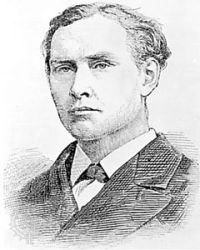
Portrait of Edward Whymper Edward Whymper The Ascent of the Matterhorn

We overlook the Tête du Lion, and nothing except the Dent d’Hérens, whose summit is still a thousand feet above us, stands in the way. The ranges of the Graian Alps—an ocean of mountains—are seen, at a glance, governed by their three great peaks, the Grivola, Grand Paradis, and Tour de St. Pierre. How soft, and yet how sharp, they look in the early morning! The mid-day mists have not begun to rise; nothing is obscured; even the pointed Viso, all but a hundred miles away, is perfectly defined.
Turn to the east, and watch the sun’s slanting rays coming across the Monte Rosa snow-fields.
Source: Gutenberg

Portrait of Edward Whymper Edward Whymper The Ascent of the Matterhorn

Our route now turned sharply to the left, and all were glad that the day was drawing to a close, so that we had the shadows from the mountains. A more frightful and desolate valley it is scarcely possible to imagine; it contains miles of boulders, débris, stones, sand, and mud; few trees, and they placed so high as to be almost out of sight; not a soul inhabits it; no birds are in the air, no fish in its waters; the mountain is too steep for the chamois, its slopes too inhospitable for the marmot, the whole too repulsive for the eagle.
Source: Gutenberg

Portrait of Edward Whymper Edward Whymper The Ascent of the Matterhorn

Advance or return was alike impossible; the ridge was denuded of its débris; and we clutched our hardest when we saw stones as big as a man’s fist blown away horizontally into space. We dared not attempt to stand upright, and remained stationary, on all fours, glued, as it were, to the rocks. It was intensely cold, for the blast had swept along the main chain of the Pennine Alps, and across the great snow-fields around Monte Rosa. Our warmth and courage rapidly evaporated, and at the next lull we retreated to the tent; having to halt several times even in that short distance.
Source: Gutenberg

Get perspective with Kwize: daily news enlightened by great literature