Summary

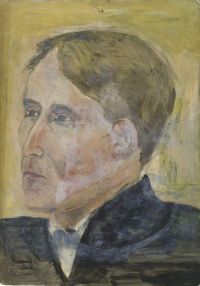
Portrait of Arthur Waley Arthur Waley Zen Buddhism, and Its Relation to Art

Art was regarded as a kind of Zen, as a delving down into the Buddha that each of us unknowingly carries within him, as Benjamin carried Joseph’s cup in his sack. Through Zen we annihilate Time and see the Universe not split up into myriad fragments, but in its primal unity. Unless, says the Zen æsthetician, the artist’s work is imbued with this vision of the subjective, non-phenomenal aspect of life, his productions will be mere toys.
Source: Gutenberg

Portrait of Arthur Waley Arthur Waley Zen Buddhism, and Its Relation to Art

Personally I believe that this passion for Nature worked more favourably on literature than on painting. The typical Zen picture, dashed off in a moment of exaltation—perhaps a moonlit river expressed in three blurs and a flourish—belongs rather to the art of calligraphy than to that of painting.
In his more elaborate depictions of nature the Zen artist is led by his love of nature into that common pitfall of lovers—sentimentality. The forms of Nature tend with him to function not as forms but as symbols.
Source: Gutenberg

Portrait of Arthur Waley Arthur Waley Zen Buddhism, and Its Relation to Art

Or again, regard your head as the top of a hollow pipe which runs straight down through your body into the earth. Meditate upon the top of your head, that is to say, upon the mouth of the drain-pipe, and then gradually ascend in your thoughts to a height of four inches above the head, and concentrate firmly on this conception. You will thus easily pass into the contemplation of non-Being, having performed the transition from elementary to complete Zen as comfortably as a workman climbs the rungs of a ladder.
Source: Gutenberg

Get perspective with Kwize: daily news enlightened by great literature