Summary

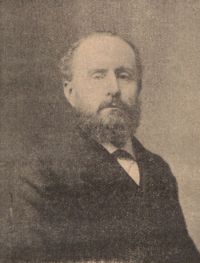
Portrait of Auguste Longnon Auguste Longnon 1911 Encyclopædia Britannica, Volume 5… (1911)

Its name—in Latin Campania, “country of plains”—is derived from the immense plains near Reims, Châlons and Troyes. It was constituted towards the end of the middle ages by joining to the countship of Champagne the ecclesiastical duchies of Reims and Langres, together with the ecclesiastical countship of Châlons. Documents of the 12th and 13th centuries make it possible to determine the territorial configuration of the countship of Champagne with greater accuracy than in the case of any other fief of the crown of France.
Source: Wikisource

Portrait of Auguste Longnon Auguste Longnon 1911 Encyclopædia Britannica, Volume 5… (1911)

The celebrated fairs of Champagne, which flourished in the 12th and 13th centuries, were attended by merchants from all parts of civilized Europe. They were six in number: two at Troyes, two at Provins, one at Lagny-sur-Marne, and one at Bar-sur-Aube. They formed a kind of continuous market, divided into six periods, and passed in turn from Lagny to Bar, from Bar to Provins, from Provins to Troyes, from Troyes to Provins and from Provins to Troyes, to complete the year.
Source: Wikisource

Portrait of Auguste Longnon Auguste Longnon 1911 Encyclopædia Britannica, Volume 5… (1911)

He became king of Navarre in 1234 by the death of his maternal uncle, Sancho VII. but by the onerous treaty which he concluded in that year with the queen of Cyprus he was compelled to cede to the king, in return for a large sum of money, the overlordship of the countships of Blois, Chartres and Sancerre, and the viscounty of Châteaudun.
Source: Wikisource

Get perspective with Kwize: daily news enlightened by great literature