“ The two towns, or rather this town with its historical memories, its melancholy ruins, the gaiety of its valley, the romantic charm of its ravines filled with tangled shrubbery and wildflowers, its rivers banked with gardens, excites the love of all its children, who do as the Auvergnats, the Savoyards, in fact, all French folks do, namely, leave Provins to make their fortunes, and always return. “Die in one’s form,” the proverb made for hares and faithful souls, seems also the motto of a Provins native. ”
Provins
Definition and stakes
The theme of “Provins” has been addressed by authors such as Honoré de Balzac, Matilda Betham-Edwards and Auguste Longnon. It is often associated with terms like province, Roman, county, England and provincial.
Quotes about “Provins”
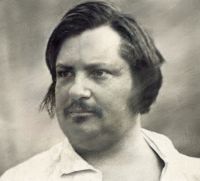 Honoré de Balzac,
Pierrette
(1840)
Honoré de Balzac,
Pierrette
(1840)
“ It is as difficult for towns and cities as it is for commercial houses to recover from ruin. Nothing is left to us of the old Provins but the fragrance of our historical glory and that of our roses,—and a sub-prefecture! ”
Honoré de Balzac,
The Celibates
“ Provins, one of the most charming towns in all France, rivals Frangistan and the valley of Cashmere; not only does it contain the poesy of Saadi, the Persian Homer, but it offers many pharmaceutical treasures to medical science. The crusades brought roses from Jericho to this enchanting valley, where by chance they gained new charms while losing none of their colors. The Provins roses are known the world over. ”
 Matilda Betham-Edwards,
Holidays in Eastern France
Matilda Betham-Edwards,
Holidays in Eastern France
“ At Coulommiers, as elsewhere, you may search in vain for rags, dirt, or a sign of beggary. Every one is rich, independent, and happy.CHAPTER III. PROVINS AND TROYES. Few travellers in this part of Eastern France turn off the Great Mulhouse line of railway to visit the ancient city of Provins, yet none with a love of the picturesque can afford to pass it by. ”
Matilda Betham-Edwards,
Holidays in Eastern France
“ Provins affords an excellent example of that spirit of decentralization so usual in France, and unhappily so rare among ourselves. Here in a country town, numbering between seven and eight thousand inhabitants only, we find all the resources of a capital on a small scale; Public Library, Museum, Theatre, learned societies. ”
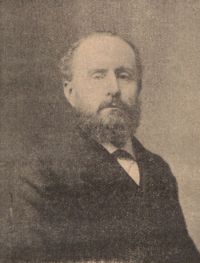 Auguste Longnon,
1911 Encyclopædia Britannica, Volume 5…
(1911)
Auguste Longnon,
1911 Encyclopædia Britannica, Volume 5…
(1911)
“ The celebrated fairs of Champagne, which flourished in the 12th and 13th centuries, were attended by merchants from all parts of civilized Europe. They were six in number: two at Troyes, two at Provins, one at Lagny-sur-Marne, and one at Bar-sur-Aube. They formed a kind of continuous market, divided into six periods, and passed in turn from Lagny to Bar, from Bar to Provins, from Provins to Troyes, from Troyes to Provins and from Provins to Troyes, to complete the year. ”
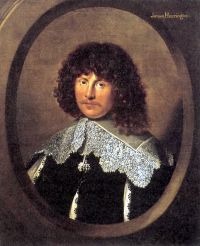 James Harrington,
The Commonwealth of Oceana
James Harrington,
The Commonwealth of Oceana
“ Provincial leagues were of different extension, according to the merit and capacity of a conquered people; but they were all of one kind, for every province was governed by Roman magistrates, as a praetor or a proconsul, according to the dignity of the province, for the civil administration and conduct of the provincial army, and a quaestor for the gathering of the public revenue, from which magistrates a province might appeal to Rome. ”
J. C. Stobart, The Grandeur That Was Rome: a survey of Roman culture and civilisation
“ To remember the limitations of ancient geographical knowledge is essential to the understanding of the Roman provincial system. Provincia means in the first instance a sphere of official duty, a man’s provincia might be the feeding of the sacred geese or it might be the control of an army. ”
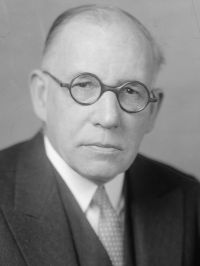 Carlton J. H. Hayes,
A Political and Social History of Modern Europe V.1
Carlton J. H. Hayes,
A Political and Social History of Modern Europe V.1
“ Such provinces were called pays d'état and included Brittany, Languedoc, Provence, Roussillon, Dauphiné, Burgundy, Franche Comté, Alsace, Lorraine, Artois, Flanders, Corsica, etc. The local assemblies in these pays d'état were by no means representative of all the inhabitants. The remaining provinces, in which no vestiges of provincial self-government survived, were called pays d'élection: they included Ile de France, Orléanais, Champagne and Brie, Maine, Anjou, Poitou, Guyenne and Gascony, Limousin, Auvergne, Lyonnais, Bourbonnais, Touraine, Normandy, Picardy, etc. ”
James George Frazer and an anonymous author, 1911 Encyclopædia Britannica (1911)
“ At the close of the republic, however, we find even such a peaceful province as Asia administered by a proconsul. In the earlier period of the republic the senate either before or after the elections determined which provinces were to be governed by consuls and which by praetors, and after their election the consuls arranged between themselves by lot or otherwise which of the provinces nominated by the senate each should have, and similarly with the praetors. ”
Wiliam Cabell Bruce, Benjamin Franklin, Self-Revealed…
“ The prospect of the middling people of the Province, the pamphlet continues, was no better, if they turned their eyes to those great and rich men, merchants and others, who were ever railing at the Quakers, but took no one step themselves for the public safety. With their wealth and influence, they might easily promote military ardor and discipline in the Province and effect everything under God for its protection. ”
 Hilaire Belloc,
Europe and the Faith
(1920)
Hilaire Belloc,
Europe and the Faith
(1920)
“ Whole provinces were thus formed and grouped, and the vaguer sentiments of a larger unity expressed themselves by the choice of some one family, one of the most powerful in every county, who would be the overlord of all the other lords, great and small. ”
Ierne L. Plunket, Europe in the Middle Ages
“ The widest area of heresy was in the provinces of Languedoc and Provence, to whose precocious mental development we have already referred.23 The Counts of Toulouse no longer ruled in the thirteenth century over any of modern Spain, but north of the Pyrenees they were tenants-in-chief to the French king for one of the most fertile provinces of southern France, while as Marquesses of Provence they were vassals of the Emperor for the country beyond the Rhone. ”
 Frederic Austin Ogg,
The Governments of Europe
Frederic Austin Ogg,
The Governments of Europe
“ The Circle.—In the Kreis, or circle, as in the province, there exist two sharply distinguished sets of governmental functions, the general and the local; but for the administration of both there is a single hierarchy of officials. The number of circles within the kingdom is about 490, with populations varying from 20,000 to 80,000. Each includes all towns lying within it which have a population of less than 25,000. A town of over 25,000 is likely to be created, by ministerial order, a circle within itself, in which case the functions of government are exercised by the municipal authorities. ”
 John Bagnell Bury,
1911 Encyclopædia Britannica
(1911)
John Bagnell Bury,
1911 Encyclopædia Britannica
(1911)
“ The scalar principle disappeared, including both the vicars and the praetorian prefect of the East (some of whose functions were merged in those of the prefect of the city) ; no authority interposed between the strategoi and the emperor. (3) The new provinces, which were called themes (the name marks their military origin: thĕma = corps) , resembled in size the provinces of Augustus, each including several of the Diocletian divisions. This third and last provincial reform has, like its predecessors, its own history. The list of themes in the 11th century is very different from that of the 8th. ”
L. Mühlbach, Empress Josephine: An Historical Sketch of the Days of Napoleon
“ The Count de Provence had, under the shadow of a mulberry-tree, his house, with a large school-room in it; and oftentimes the whole court-society were converted into scholars of both sexes, who took their seats on the benches of the school-room, whilst the Count de Provence, in a long coat with lead buttons and with an immense rod in his hand, ascended the cathedra and delivered to his school-children a humorous and piquant lecture, all sparkling with wit. ”
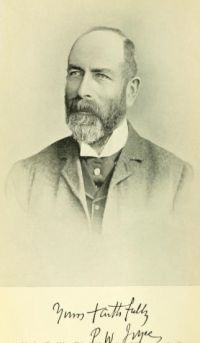 P. W. Joyce,
The Story of Ancient Irish Civilization
P. W. Joyce,
The Story of Ancient Irish Civilization
“ The provinces were divided into a number of territories, over which were kings of a still lower grade, each under the king of his own province. If the district was not large enough to have a king, it was ruled by a chief, who was subject to the king of the larger territory in which the district was included. [Pg 2] The king was always chosen from one particular ruling family; and when a king died, those chiefs who had votes held a meeting, lasting for three days and three nights, at which they elected whatever member of that family they considered the wisest, best, and bravest. ”
 Edwin Asa Dix,
A Midsummer Drive Through the Pyrenees
Edwin Asa Dix,
A Midsummer Drive Through the Pyrenees
“ We are nearing the Pyrenees now, and entering the ancient and famous province of Béarn, once a noted centre of mediæval chivalry. Beam did not become part of France until almost modern times. [13] For seven hundred years preceding, its successive rulers held their brilliant court unfettered and unpledged. "Ours," declared its barons and prelates in assembly, "is a free country, which owes neither homage nor servitude to any one." The life of the province was its own, separated entirely from that of the kingdom. It had its own succession, its own wars and feuds, its own love of country. ”
Leon van der Essen, A Short History of Belgium (1916)
“ Each province had a certain number of votes in the Congress: Brabant 20 votes, Flanders 22, etc. The confederated provinces made a declaration favoring the Roman Catholic faith and the maintenance of relations with the church as before the reforms of Joseph II. Each province retained its autonomy and sovereign rights, and all powers not delegated to the Congress. In case of attack all provinces were to join in the defense of the one attacked. This, we know, had been the dream of Emperor Charles V in the sixteenth century. The great ruler must have rejoiced in his grave! ”
Frederick Whymper, The Sea: Its Stirring Story of Adventure…
“ As to the province, it’s a splendid province, and calculated to go ahead; it will grow as fast as a Virginny gall—and they grow so amazing fast, if you put one of your arms round one of their necks to kiss them, by the time you’ve done they’ve growed up into women. ”
Francis Stoughton Sullivan, Lectures on the constitution and laws of England (1776)
“ This division of the kingdom into counties, and their subdivisions, is generally ascribed to king Alfred. That the division of hundreds into tithings was his is undoubted; and it is probable the division of counties into hundreds was his also; that the people, beggared by the Danish incursions, might have justice rendered to them nearer their own homes, without the expence, the fatigue, and even danger of travelling to the county town. But as to counties, they certainly were more antient. ”
 Franz Delitzsch,
Biblical Commentary Old Testament…
(1884)
Franz Delitzsch,
Biblical Commentary Old Testament…
(1884)
“ To the first class belong the סגניּא and the satraps; to the second the הדּברין, state councillors, and the פּחותא, civil prefects of the provinces. Accordingly, we will scarcely err of by סגניּא we understand the members of the highest council of state, by הדּבריּא the ministers or members of the (lower) state council, and by the satraps and pechas the military and civil rulers of the provinces. This grouping of the names confirms, consequently, the general interpretation of the מלוּתא סרכי כּל, for the four classes named constitute the entire chief prefecture of the kingdom. ”
Moritz Busch, Bismarck (1898)
“ The Prefecture of a French provincial town, such, for instance, as that of Versailles or Nancy, is, as a general rule, both more roomy and imposing than the narrow and old-fashioned tenement in which the Chancellor of the German Empire and the officials of the Political Department of the Foreign Office were housed for almost sixteen years. ”
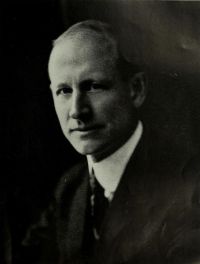 Frank Pierrepont Graves,
A student's history of education
Frank Pierrepont Graves,
A student's history of education
“ At the head of the order is the ‘general,’ who is elected for life and has vast administrative powers. As the society spread, the countries that came under its control were divided into provinces, and at the head of ‘provincial,’ the Jesuit interests in each of these districts is the ‘provincial,’ who is appointed by the general for three years. In each province there are various colleges, whose presiding ‘rector,’ and other officials. officer, or ‘rector,’ is chosen for three years by the general, but is directly responsible to the provincial and reports to him. ”
 Thomas De Quincey,
The English Mail-Coach and Joan of Arc
Thomas De Quincey,
The English Mail-Coach and Joan of Arc
“ The county was my own native county—upon which, in its southern section, more than upon any equal area known to man past or present, had descended the original curse of labour in its heaviest form, not mastering the bodies only of men, as of slaves, or criminals in mines, but working through the fiery will. Upon no equal space of earth was, or ever had been, the same energy of human power put forth daily. ”
Paul Meyer, 1911 Encyclopædia Britannica (1911)
“ In addition to its being in some sort consecrated by the use made of it by the Italians, who were the first after the Renaissance to study the Works of the troubadours, it must not be forgotten that, just as the Roman provincial, in which the name originated, extended across the south of Gaul from the Alps to Toulouse and the Pyrenees, so still in the middle ages provincial, provincial er, were understood in a very wide sense to designate not only Provence strictly so called, i.e. ”
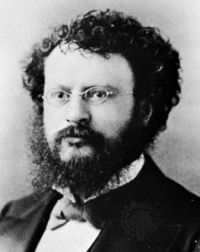 John Fiske,
American Political Ideas Viewed from the Standpoint of Universal History
John Fiske,
American Political Ideas Viewed from the Standpoint of Universal History
“ Distance and difficulty, and in early times danger too, keep many people away. And though a shire is not a wide tract of country for most purposes, and according to modern ideas, it was nevertheless quite wide enough in former times to bring about the result I have mentioned. In the times before the Norman conquest, if not before the completed union of England under Edgar, the shire-mote or county assembly, though in theory still a folk-mote or primary assembly, had shrunk into what was virtually a witenagemote or assembly of the most important persons in the county. ”
Frederic Austin Ogg,
The Governments of Europe
“ Of these, three—the first, third, and fifth—are spheres both of the central administration and of local self-government; two—the second and fourth—exist for administrative purposes solely. Of provinces there are twelve: East Prussia, West Prussia, Brandenburg, Pomerania, Silesia, Posen, Westphalia, Saxony, Hanover, the Rhine Province, Schleswig-Holstein, and (p. 269) Hesse-Nassau. [393] Unlike the French and Italian departments, the Prussian provinces are historical areas, of widely varying extent and, in some instances, of not even wholly continuous territory. ”
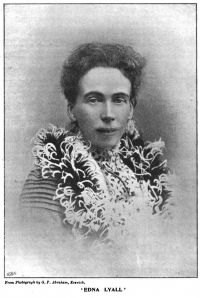 Edna Lyall,
In Spite of All: A Novel
Edna Lyall,
In Spite of All: A Novel
“ The beautiful county, a very Garden of Eden for fertility and loveliness, became a hell upon earth, and the pathetic loyalty of the people to a wholly unworthy monarch was speedily changed to active and determined resistance. ”
Celia Fiennes, Through England on a side saddle (1888)
“ All that are free-holders of a County has a voice to Choose.The Corporations and Burroughs Chuse by their freemen also, but because of the peculiar Customs and priviledges in each place it makes some variation. Those that have most of voices which are Legal to Chuse, the Bailiff or major of the place or sherriffs return up to the Crown office, from whence the precept Came, the Name of such persons so Chosen to sitt in the parliament. ”
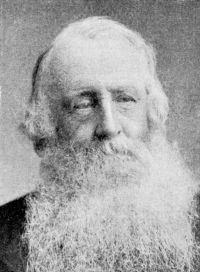 Edward A. Freeman,
The Chief Periods of European History
Edward A. Freeman,
The Chief Periods of European History
“ The land is divided into counties, departments, provinces, administered according to such rules as the central legislature may think good to lay down. It is true that in our own country the shire is, both in idea and in part of the land in historical fact, older than the kingdom. But in a large part of England the shire is as truly a division of the kingdom as a French department, and where it is not so historically it has become so practically. ”
Wiliam Cabell Bruce, Benjamin Franklin, Self-Revealed…
“ At present they were like the separate filaments of flax before the thread is formed, without strength because without connection; but union would make them strong and even formidable. Many of the inhabitants of the Province were of the British race, and, though the fierce fighting animals of those happy islands were said to abate their natural fire and intrepidity, when removed to a foreign clime, yet, with their people this was not so. ”
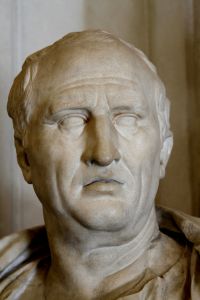 Marcus Tullius Cicero,
The Orations of Marcus Tullius Cicero…
Marcus Tullius Cicero,
The Orations of Marcus Tullius Cicero…
“ But if provinces appear to the consuls as things to be desired, as they often have been desired by many illustrious men, first restore us Brutus, the light and glory of the state, whom we ought to preserve like that statue which fell from heaven, and is guarded by the protection of Vesta, which, as long as it is safe, ensures our safety also. Then we will raise you, if it be possible, even to heaven on our shoulders, unquestionably we will select for you the most worthy provinces. But at present let us apply ourselves to the business before us. ”
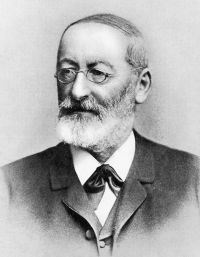 Ferdinand Julius Cohn,
Popular Science Monthly
(1883)
Ferdinand Julius Cohn,
Popular Science Monthly
(1883)
“ The province, again, can be regarded as an association of villages which represent the smallest social organizations; every village is also a state in miniature, with independent economy, and capable of maintaining itself independently in case of necessity, and, in fact, of growing up, as Rome, Carthage, and Venice have shown, into mighty states. ”
