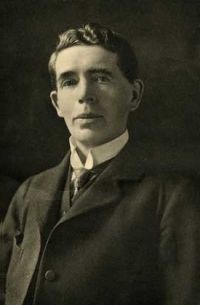
John Bagnell Bury

John Bagnell Bury

Summary

Portrait of John Bagnell Bury John Bagnell Bury 1911 Encyclopædia Britannica (1911)

Justinian, possessed by large ideas and intoxicated with the majesty of Rome, aspired to be a great conqueror, a great lawgiver, a great pontiff, a great diplomatist, a great builder, and in each of these spheres his reign holds a conspicuous place in the annals of the Empire. His legal work alone, or the building of Santa Sophia was enough to ensure him immortal fame. But deep shadows balance the splendour. The reconquest of Africa was thoroughly justified and advantageous, but Italy was bought at a ruinous cost.
Source: Wikisource

Portrait of John Bagnell Bury John Bagnell Bury 1911 Encyclopædia Britannica (1911)

ROMAN EMPIRE, LATER. The reign of Constantine the Great forms the most deep-reaching division in the history of Europe. The external continuity is not broken, but the principles which guided society in the Greek and Roman world are replaced by a new order of ideas. The emperor-worship, which expressed a belief in the ideal of the earthly empire of Rome, gives way to Christianity; this is the outward sign that a mental transformation, which we can trace for 300 years before in visible processes of decay and growth, had reached a crisis.
Source: Wikisource

Portrait of John Bagnell Bury John Bagnell Bury 1911 Encyclopædia Britannica (1911)

If the king hesitates, it is suggested that he should visit New Rome. The attraction of this idea is irresistible, and when he comes to the capital, the pomp of his reception, the honours shown him by the emperor, and the splendour of the religious ceremonies overcome his last scruples. Thenceforward imperial influence is predominant in his dominion; priests become his advisers; a bishop is consecrated, dependent on the patriarch of Constantinople; and the barbarians are transformed by the penetration of Byzantine ideas.
Source: Wikisource

Get perspective with Kwize: daily news enlightened by great literature