“ Perhaps, from being more oppressed and beset by foes than any of the other Slavs, these nations have come to look upon their sense of race as a sheet-anchor to which they clung, at first with hope, and then with heart-felt love. To a Russian,104 Slavdom is the symbol of his protectorate, but to a Serbo-Croat it is the breath of life. ”
Slavs
Definition and stakes
The Slavs, a branch of the Indo-European family, inhabit vast regions of Eastern Europe and parts of Asia, characterized by a complex interplay of cultural endurance and historical conflict. Authors such as Srdan Tucic emphasized Slavdom as both a symbolic sanctuary and a crucial identity, while Eliza Orzeszkowa focused on their dramatic past and lasting courage.
Tomáš Garrigue Masaryk highlighted their geographical constraints and tensions with neighboring countries, contrasting them with other European peoples. These viewpoints collectively depict the Slavs as a people shaped by ongoing difficulties, yet defined by a deep sense of tradition and perseverance, their story woven through both hardship and cultural continuity.
Quotes about “Slavs”
 Eliza Orzeszkowa,
The Argonauts
Eliza Orzeszkowa,
The Argonauts
“ The Slavs have behind them a history dramatic to the utmost, varied, full of suffering, full also, of heroism in endurance or valor.The present time is momentous for all nations, the future is a tangled riddle; for the Slavs this seems true in a double measure. To involved social problems is added race opposition in the breasts of neighbors, a deep, sullen historic hostility. Hence when a writer of power appears among the Slavs, whether he takes up the past or the present, he has that at hand through which he compels the whole world to listen. ”
Anonymous, Seven years in Vienna (August, 1907-August… (1917)
“ The all-pervading and very distinct impression which remains is that the Slavs have very distinct national aims, which they are prepared to pursue with an utter persistence and ruthlessness, of which no other peoples are capable. ”
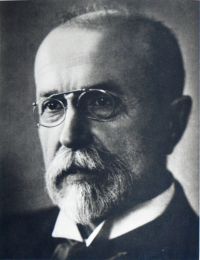 Tomáš Garrigue Masaryk,
The Slavs among the nations
(1916)
Tomáš Garrigue Masaryk,
The Slavs among the nations
(1916)
“ These Slav groups are the last remnants of the link which existed in the 9th century between the Northern and the Southern Slavs, which was severed by the invasion of the Magyars. Geographical contact has a very great importance for the Slavs. Let us first examine from this point of view the position of the Slavs in the world. The Slavs are the nations with the most neighbours. What a contrast, for example, between the English and the Slavs! France has only three or four neighbours; the Italians three; the Germans seven; but the Slavs have twelve. ”
“ Labouring in a period when all national effort was suppressed in every possible way, when Slav sympathies were accounted high treason, he rose to a position of unassailable eminence, which enabled him to set the mark of his powerful personality like a leitmotive on the whole nineteenth-century history of the Southern Slavs. ”
Various, Charities and the Commons: The Pittsburgh Survey…
“ In citing these various types I have not tried to make out the Slavs as better than they are. I have, to repeat my opening statement, merely tried to show that these generally unknown people are above all human beings,—that they have not alone vices and undesirable qualities, but virtues,—that though crude, they have their possibilities. ”
Littell's Living Age — Volume 146…
“ The future is ours. The Germans have reached their day, the English their midday, the French their afternoon, the Italians their evening, the Spanish their night; but the Slavs stand on the threshold of the morning. ”
Sir E. Denison Ross, The heart of Asia
“ These movements ceased in the seventh century, the close of which saw the Slavs firmly established in European Russia, Illyria, and Bulgaria. They were employed in agriculture and stock-raising, and their characteristics appear to have been much the same as those observed at the present day in the rural populations of Eastern Europe. Ancient writers agree in depicting them as being hospitable and cheerful, firmly attached to ancient customs, courageous, and fighting only in self-defence. ”
Edward Parrott, The Childrens' Story of the War…
“ By the word Slav we mean a member of that branch of mankind known as the Slavonic race. The Slavs inhabit most of the east of Europe and a large part of Asia, and they are really more Asiatic than European. Most of the Russians and the Christian peoples of the Balkan Peninsula are Slavs, and so, too, are the Poles, who live partly in Austria, partly in Germany, and partly in Russia. In Austria, and especially in Hungary, there are many Slav races, but the ruling peoples in these countries are Germans in Austria and Magyars in Hungary. ”
Tomáš Garrigue Masaryk,
The Slavs among the nations
(1916)
“ The effect of that has been to develop the individuality of the various Slav nations. Great differences may indeed be noted in the character of their civilisation. They have also been influenced racially by the neighbouring races; pure-blooded Slavs are rarely found. From this point of view we cannot boast of being better situated than other peoples. ”
Howard Angus Kennedy, The Book of the West
“ There is something in the woodland that seems to fix a family to the soil with peculiar tenacity—partly, no doubt, because we value most what we have taken most trouble to secure. Then the Slavs have come to us with no idea except to make a permanent home. “In the brush country they can’t be beaten,” says an observer of experience. ”
 Owen Barfield,
History in English words
(1926)
Owen Barfield,
History in English words
(1926)
“ The Slavs, although they occupied—and still occupy—the whole vast east of Europe, and although they number something like two hundred million souls have as yet had extraordinarily little [30] influence upon our national life. There are only two Slavonic words which may be described as common in all our language, trumpet and slave, and both have come to us by devious routes, the first through German and French, the second through Greek and Latin. ”
“ This is a scarcely desirable state of affairs in view of the fact that the Slavs as a whole are lower and more primitive in character and condition than the Germans. The cultivated portion of Slavic populations forms a very small proportion in number of the whole, and stands far in advance of the abundant multitude of peasants and artisans, a vast body of people who are ruled chiefly by fear ”
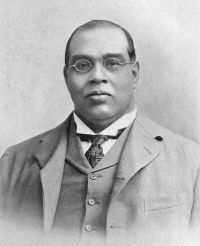 Romesh Chunder Dutt,
Three Years in Europe, 1868 to 1871
(1896)
Romesh Chunder Dutt,
Three Years in Europe, 1868 to 1871
(1896)
“ But there is still another race, the Slavs, inhabiting Bohemia and many other parts of the empire, who have not hitherto had much influence in administration, but who are gradually awakening to a consciousness of their political importance. There are millions of Slavs under Russia, and the Slavs of Turkey are shaking off the Musalman yoke; so that it is easy to foresee, the Slavs will yet be a great power in Europe. ”
Aleš Hrdlička, The Czechoslovak Review (1918)
“ That the Slavs, particularly those of the north and those of the Balkans, are capable of much endurance, has been well shown by the Russians in the Napoleonic, some of the Turkish and the present wars, and by the Serbians and Bulgarians in their past as well as recent wars with Turkey, in the late Serbian struggle and retreat together with the astonishing following rejuvenation, and on many other occasions. ”
Charles Sarolea, German Problems and Personalities
“ They are fighting because they are convinced that they have the Might and the Right and the Duty of crushing the French and the Russians, because through French veins courses the tainted blood of the Gauls of Cæsar, and because through the veins of the Slavs courses the white fluid of the slave and the yellow fluid of the Tatar. ”
“ There are many reasons for the decline of the Western Slavs, but the principal one is the negative type of their character and the consequent tendency to dissensions and mutual jealousies.... Even as regards national culture, Russia—in spite of all her internal miseries—takes the lead among the Slav nations. ”
The Bohemian Review, volume 2, no… (1918)
“ Having regard to the true wellfare of Slav nations, we declare it to be our desire and our firm will that the freedom of Slav nations, once attained, shall not be marred by external or internal oppression, either of the nation or of the individual. We want to labor not merely for external, but also for internal liberation. We want the Slavs to be what best answers to their true nature, namely democratic nations. ”
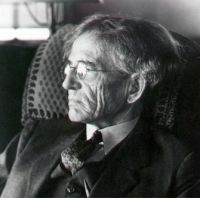 John R. Commons,
Races and Immigrants in America
John R. Commons,
Races and Immigrants in America
“ One branch of the Slavs has spread the power of Russia east and west, and is now crushing the alien Hebrew, Finn, Lithuanian, and German, and even its fellow-Slav, the Pole, who, to escape their oppressors, are moving to America. ”
Tomáš Garrigue Masaryk,
The Slavs among the nations
(1916)
“ The Slavs, and in particular the Russians, the density of whose population is very small compared with the vast territories that they occupy, have the great advantage of possessing lands of an enormous area for their future increase of population. ”
The Circle of Knowledge: A Classified…
“ The Slavs, the most numerous branch, forming about forty-five per cent of the whole population, appear in two divisions, a northern and southern; to the northern Slavs belong the Czechs of Bohemia, the Moravians and Slovaks, Poles and Ruthenians, or Russniaks of Galicia and Bukowina; to the southern Slavs belong the Slovenes, Croats and Servians, who occupy the southern border lands of Hungary, between the Drave and Save, westward to the peninsula of Istria and the Dalmatian coasts of the Adriatic. ”
Edward Alfred Steiner, The Immigrant Tide, Its Ebb and Flow
“ The facts that the Slavs inhabited the eastern portions of Europe to its very edge, that Christian civilization was imposed upon them by Byzantine and Roman influences, when both were struggling for the mastery of the Christian world, and that the territory they inhabited became their battle-ground—had great and lasting effect, not only upon their political history but upon their religious life and their national character. ”
Aleš Hrdlička, The Czechoslovak Review (1918)
“ Mental characteristics.—This is a dangerous field to tread upon, and would be quite prohibitive to those not personally and thoroughly acquainted with the Slavs, as well as with the more important groups of non-Slavic Europeans. To those, however, who have been fortunate enough to gain close personal knowledge of these various groups, it unquestionably appears that the Slavs as a whole possess certain mental characteristics or shades of characteristics which are better developed or more general than among other groups of the white world. ”
Edward Alfred Steiner, The Immigrant Tide, Its Ebb and Flow
“ The economic, social and political conditions among the Slavs are such as will for some time in the future make their coming to America in large numbers, a certainty, and it is not out of the question that they will be the determining factor in our civilization. ”
Tomáš Garrigue Masaryk,
The Slavs among the nations
(1916)
“ But even Scandinavism does not constitute so close a relationship between the various branches of this race as that which unites the different Slav groups. The Slavs are much more closely united from the linguistic and intellectual point of view than the various groups of other races are with one another. ”
Various, The historians' history of the world in twenty-five volumes… (1905)
“ Among the Slavs of purer blood these characteristics have marked their political life with a mobile, inconstant, and anarchical spirit which has rendered extremely difficult their national existence and which, taken with their geographical position, has been the great obstacle in the way of their civilisation. The distinguishing faculty of the race is a certain flexibility and elasticity of temperament and character which render it adaptable to the reception and the reproduction of all sorts of diverse ideas; the imitative faculty of the Slavs is well known. ”
 Edward Augustus Freeman,
Prose Masterpieces from Modern Essayists…
(1891)
Edward Augustus Freeman,
Prose Masterpieces from Modern Essayists…
(1891)
“ The Slavs undoubtedly form the greatest element in the population of the Eastern peninsula, and they once reached more widely still. Taking the Slavonic name in its widest meaning, they occupy all the lands from the Danube and its great tributaries southward to the strictly Greek border. The exceptions are where earlier races remain, Greek or Italian on the coast-line, Albanian in the mountains. The Slavs hold the heart of the peninsula, and they hold more than the peninsula itself. The Slav lives equally on both sides of what is or was the frontier of the Austrian and Ottoman empires ”
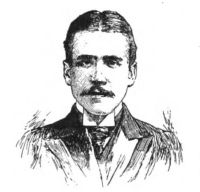 Stephen Bonsal,
The North American Review/Volume 206…
(1917)
Stephen Bonsal,
The North American Review/Volume 206…
(1917)
“ The Slavs in America believe that their cause has the overwhelming support of their fellow-citizens, they have no fear of what the outcome will be, nor yet that their interests, so bound up with and inseparable from the peace of the world, shall be neglected. ”
Ellis Hovell Minns, 1911 Encyclopædia Britannica (1911)
“ Modern historians seem to adopt their attitude to the process according to their view of the Slavs; German writers, in their contempt for the Slavs, mostly deny the possibility of their having forced German tribes to leave their homes, and assume that the riches of southern Europe attracted the latter so that they willingly gave up their barren northern plains; most Slavonic authors have taken the same view in accordance with the idealistic picture of the peaceful, kindly, democratic Slavs who contrast so favourably with the savage Germans and their war-lords ”
Moritz Busch, Bismarck (1898)
“ The German landed proprietors support the Slavs because they themselves are conservative or reactionary; and among the leaders of the Slav party and those who are promoting the compromise there are a great number of prominent aristocrats who do not understand a word of Bohemian or any other Slav language. ”
Ellis Hovell Minns, 1911 Encyclopædia Britannica (1911)
“ There is a gradual transition to cemeteries with Roman objects which shade off into such as are certainly Slavonic. The physical type of the Slavs is not sufficiently clear to help in throwing light upon the past of the race. Most of the modern Slavs are rather short-headed, the Balkan Slavs being tall and dark, those of central Europe dark and of medium height, the Russians on the whole rather short though the White and Little Russians are of medium height; in complexion the southern Russians are dark, the northern light, but with less decided colour than fair western Europeans. ”
Jan Hanuš Máchal, The Mythology of All Races/Volume 3 (1918)
“ That the worship of ancestors was widely spread among the Slavs may be considered an established fact: the Slavs looked upon their forefathers as guardian penates who were deeply concerned about the happiness both of the family and of their dwelling ”
Ján Kollár, Songs of the Slav (1918)
“ Sciences shall likewise Slav channels see; Our people's customs, dress and music will On both the Seine and Danube modish be. O would that I had rather been born when The Slavs shall rulers be! Or better still, I shall then rise up from my grave again. This work is a translation and has a separate copyright status to the applicable copyright protections of the original content. ”
Fanny Janet Sandison Blunt, Twenty Years' Residence among the People of Turkey… (1878)
“ They attacked with great ferocity the patient plodding Slavs, who were engaged in cultivating the land and rearing cattle, quickly obtained the governing power, and after tasting the comforts of a settled life, gradually adopted to a great extent the manners, customs, and even the language of the people they had conquered. ”
Various, The historians' history of the world in twenty-five volumes… (1905)
“ On the north the Slavs reached the great Valdai plateau from which Russia’s largest rivers descend, and the southern part of the great lake region, that of Ilmen.cThere is no indication that the race is deficient in genius. It was the Slavs who opened the way to the west by two great movements which inaugurated the modern era—the Renaissance and the Reformation ”
Georg Morris Cohen Brandes, Poland: A Study of the Land People and Literature (1903)
“ In other respects, like the women of other countries, of course they are of all sorts; gentle and quiet, or suspiciously sharp-sighted, virginal and combative, or with erotic tendencies, or vain, theatrical dispositions. There are some who, genuine Slavs, are wholly absorbed in intellectual enthusiasms, and there are individual commanding natures, typically Polish, with the determination and firmness of an exceptional man. ”
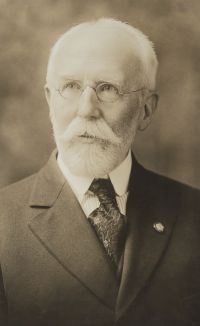 Howard B. Grose,
Aliens or Americans?
Howard B. Grose,
Aliens or Americans?
“ Fortunately all the Slavs do not go to the mines, and those who follow agriculture or trades afford a pleasanter study. The census of 1900 gave a million and a quarter of foreign-born Slavs and the number has been largely increased. ”
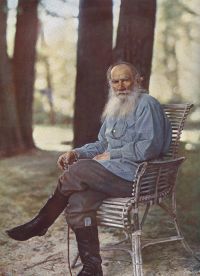 Leo Tolstoy,
The Complete Works of Lyof N. Tolstoï
(1899)
Leo Tolstoy,
The Complete Works of Lyof N. Tolstoï
(1899)
“ Letting the period of the appanages have the go-by, we continued our study of Russian history, and here are some extracts from the copy-books of the older pupils. From the copy-book of the pupil V. R.—Our ancestors were called Slavs. They had neither tsars nor princes. They were divided into families, were always attacking one another, and went out to make war. Once upon a time the Normans fell upon the Slavs, conquered them, and imposed a tribute on them. Then they said:— "How can we live so? Let us choose ourselves a prince in order that he may rule over us." ”
Ellis Hovell Minns, 1911 Encyclopædia Britannica (1911)
“ Sclaveni, or something like it, has been the regular name for the Slavs from that day to this. The native form is Slovene; in some cases, e.g. in modern Russian under foreign influence, we have an a instead of the o. The combination si was difficult to the Greeks and Romans and they inserted /, th or most commonly c, which continues to crop up. So too in Arabic Saqaliba, Saqldb. The name has been derived from slovo, a word, or slava, glory, either directly or through the -slav which forms the second element in so many Slavonic proper names, but no explanation is satisfactory. ”
Related terms
Authors who wrote about “Slavs”
Ellis Hovell MinnsSrdan TucicTomáš Garrigue MasarykJan Hanuš MáchalEdward Alfred Steiner Thomas ČapekHoward B. GroseHenry BaerleinB. Granville Baker
 Leon Dominian
 Edward Alsworth RossVariousSir E. Denison RossAleš HrdličkaAnonymousEdward ParrottEliza OrzeszkowaHoward Angus KennedyElizabeth O'NeillLogan Marshall
Tomáš Garrigue MasarykJan Hanuš MáchalEdward Alfred SteinerThomas ČapekHoward B. GroseHenry BaerleinB. Granville BakerLeon DominianEdward Alsworth RossVariousSir E. Denison RossAleš HrdličkaAnonymousEdward ParrottEliza OrzeszkowaHoward Angus KennedyElizabeth O'NeillLogan Marshall