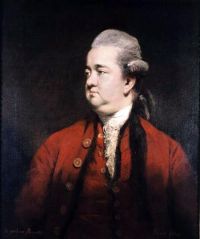
Arcadius, a Roman emperor of the Eastern Empire, appears in historical and literary discussions as a figure entangled in political maneuvering, religious conflicts, and the instability of imperial rule. Authors such as Edward Gibbon portray him as a passive sovereign shaped by courtly schemes, while W. R. W. Stephens contrasts his inertia with the grandeur of his environment.
Alfred Brittain connects him to early Christian accounts, emphasizing the spiritual contradictions within his circle, and Philip Schaff highlights the turbulent administration under his regent, Rufinus. Procopius, on the other hand, presents Arcadius’s rule through the perspective of external dangers and internal discord. These differing depictions converge to illustrate Arcadius as a representation of the interaction between imperial power, religious authority, and the delicate equilibrium of influence in late antiquity.