Summary

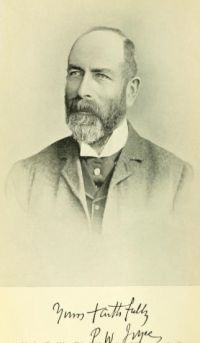
Portrait of P. W. Joyce P. W. Joyce The Story of Ancient Irish Civilization

Everywhere we meet with passages in which are noticed, with loving admiration, not only those features mentioned by Keats, but many others, such as the boom and clash of the waves, the cry of the sea-birds, the murmur of the wind among the trees, the howling of the storm, the sad desolation of the landscape in winter, the ever-varying beauty of Irish clouds, the cry of the hounds in full career among the glens, the beauty of the native music, tender, sad, or joyous, and so forth in endless variety.
Source: Gutenberg

Portrait of P. W. Joyce P. W. Joyce The Story of Ancient Irish Civilization

An Irish fair in those times was a lively and picturesque sight. The people were dressed in their best, and in great variety, for all, both men and women, loved bright colours; and from head to foot every individual wore articles of varied hues. Here you see a tall gentleman walking along with a scarlet cloak flowing loosely over a short jacket of purple, with perhaps a blue trousers and yellow headgear, while the next showed a colour arrangement wholly different; and the women vied with the men in variety of hues.
Source: Gutenberg

Portrait of P. W. Joyce P. W. Joyce The Story of Ancient Irish Civilization

The Greeks and Romans of old had—as we know—their augurs or soothsayers, who forecasted the future, like our druids, and by much the same observations, signs, and tokens. We must not judge those old people, whether Greek, Roman, or Irish, too severely for believing in these prophets; for although there are no druids or soothsayers now, we have amongst us plenty of palmists and fortune-tellers of various kinds, who make a good living out of those people who are simple enough to believe in them.
Source: Gutenberg

Get perspective with Kwize: daily news enlightened by great literature