Shire

Definition and stakes

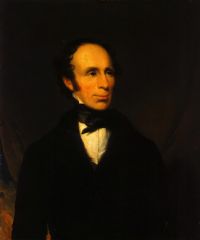
Leopold Wagner,  Names: and Their Meaning; A Book for the Curious

“ Although every shire is a county, it is not every county to whose individual name the word “shire” may be added. The latter is essentially Anglo-Saxon, denoting a division of land possessed by an earl, and wherever it occurs it points conclusively to the Saxon occupation of England. Certainly, we do not speak of Essex-shire, Middle-sex-shire, or Sussex-shire, because the Saxon territories referred to, as well as their relative positions, are fully indicated in the names themselves. ”
Source: Gutenberg

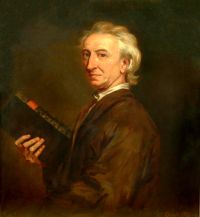
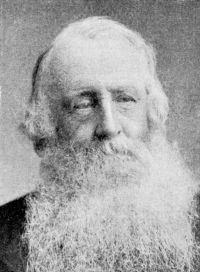
Portrait of Edward A. Freeman Edward A. Freeman,  The Chief Periods of European History

“ The land is divided into counties, departments, provinces, administered according to such rules as the central legislature may think good to lay down. It is true that in our own country the shire is, both in idea and in part of the land in historical fact, older than the kingdom. But in a large part of England the shire is as truly a division of the kingdom as a French department, and where it is not so historically it has become so practically. ”
Source: Gutenberg

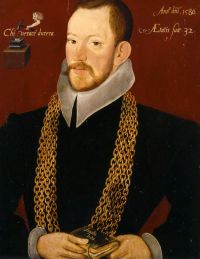
Portrait of Sir Owen Morgan Edwards Sir Owen Morgan Edwards,  A Short History of Wales (1906)

“ The chief difference between a shire and a lordship is that the king's writ runs to the shire, but not to the lordship. The king administers the law in the shire, through the sheriff; the lord administers the law in the lordship through his own officials.
In 1535 the marches of Wales were turned into shire ground. The bulk of them went to make seven new shires—Pembroke, Glamorgan, Monmouth, Brecon, Radnor, Montgomery, and Denbigh. The others were added to the older English and Welsh counties.
”
Source: Wikisource

Get perspective with Kwize: daily news enlightened by great literature