Summary

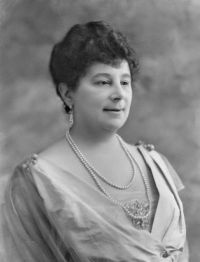
Portrait of Baroness Orczy Baroness Orczy A Son of the People — Chapter 17 (1913)

Bideskúty had rested his elbow on the table, and hidden his face in his hands, so that the peasant could not see how deeply he felt his present position, how humbled he really was in his pride at being so absolutely bounden to one beneath him, to one who was quietly giving him the most serious lesson, he had ever had in his life. He felt very like a chidden child, still obstinately shutting his eyes to the fact that nothing but his own folly, had brought him to the verge of ruin, and looking on all his misfortunes as the relentless hand of fate.
Source: Wikisource

Portrait of Baroness Orczy Baroness Orczy A Son of the People — Chapter 17 (1913)

If like me, you saw ruin staring you in the face? What then? If every league of your land is mortgaged to beyond its value, with interest to pay far beyond what it can produce? What then? If your very house, in which for seven hundred years every one of your ancestors were born and have died, is about to pass into strangers’ hands? Then, Kemeny András, are there sorrows that are harder to bear!
Source: Wikisource

Portrait of Baroness Orczy Baroness Orczy A Son of the People — Chapter 17 (1913)

I am a farmer, my lord,” said András simply, “I know the value of every acre upon the lowland.”
Bideskúty thought, that the peasant purposely evaded giving him an opening for what he wanted to say. Never in all his life had he felt so absolutely at a loss of how to begin; he had never asked anyone anything, and, now, he was compelled to do it of a man, whom he despised as utterly beneath him, and yet whom, somehow, he could not manage to treat in the same way as he did Rosenstein, the Jew.
Source: Wikisource

Get perspective with Kwize: daily news enlightened by great literature