Summary

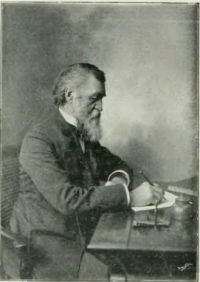
Portrait of Benjamin F. Gue Benjamin F. Gue History of Iowa From the Earliest Times to the Beginning of the Twentieth Century… (1903)

As a leader he inspired his followers with the same abhorrence of human slavery that he had entertained during all the mature years of his life. Every man of his Harper’s Ferry band was willing to give his life, if need be, for the overthrow of slavery. No one was more impressed with this conviction than Governor Wise. Manly fortitude under sentence of death and upon the scaffold impressed the court, the Governor and the Southern people with the unwelcome conviction that slavery was in peril, when men would die for the liberation of its helpless victims.
Source: Wikisource

Portrait of Benjamin F. Gue Benjamin F. Gue History of Iowa From the Earliest Times to the Beginning of the Twentieth Century… (1903)

In speaking of John Brown’s invasion, the Governor said:
“Is it strange that, maddened by recollections of wrongs inflicted upon them in Kansas because of their love of freedom, should lead men to the conclusion that they should do and dare as much at home for liberty as those who have oppressed them were doing abroad for slavery? While I deeply deplore and most unqualifiedly condemn, I cannot wonder at the recent unfortunate and bloody occurrence at Harper’s Ferry.
Source: Wikisource

Portrait of Benjamin F. Gue Benjamin F. Gue History of Iowa From the Earliest Times to the Beginning of the Twentieth Century… (1903)

On the day of his execution Victor Hugo, in exile, wrote these prophetic words: “John Brown, condemned to death is to be hanged to-day. His hangman is not Governor Wise, nor the little State of Virginia. His hangman (we shudder to think it and say it) is the whole American Republic. Politically speaking, the murder of Brown will be an irrevocable mistake. It will deal the Union a concealed wound which will finally sunder the States.” A few months later he wrote: “Slavery in all its forms will disappear. What the South slew last December was not John Brown, but slavery.
Source: Wikisource

Get perspective with Kwize: daily news enlightened by great literature