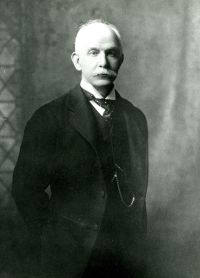
Brooks Adams

Brooks Adams

Summary

Portrait of Brooks Adams Brooks Adams The Law of Civilization and Decay… (1896 | notes)

The crime of the English monks, like the crime of the Templars, was defenceless wealth; and, like the Templars, they fared hardly in proportion to their devotion and their courage. The flexible and the corrupt, who betrayed their trust, received pensions or promotion; the Carthusians, against whose stern enthusiasm torments were powerless, perished as their predecessors had perished in the field of Saint Antoine.
The attack of Cromwell's hirelings resembled the onlaught of an invading army. The convents fared like conquered towns
Source: Wikisource

Portrait of Brooks Adams Brooks Adams The Law of Civilization and Decay… (1896 | notes)

Twelve months later the landed magnates felt strong enough to discard the tradesmen; the alliance which had carried through the Reformation was dissolved, and Cromwell was beheaded.
Never did pope enforce the worship of the miracle more savagely than did Henry. By the act of the "Six Articles," the denial of the miracle of the mass was punished by burning and forfeiture of goods without the privilege of abjuration. Purity of faith could not have been the ideal of reformers.
Source: Wikisource

Portrait of Brooks Adams Brooks Adams The Law of Civilization and Decay… (1896 | notes)

Generation by generation the rapidity of movement had increased, communication had been re-established between the East and West, the mariner's compass and gunpowder had been introduced into Europe, the attack had mastered the defence, and as the forms of competition slowly changed, capital accumulated, until, at the beginning of the sixteenth century, wealth reached the point where it could lay the foundation of the paid police—the crowning triumph of the monied class.
Source: Wikisource

Get perspective with Kwize: daily news enlightened by great literature