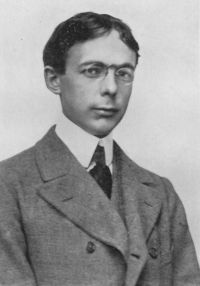
Carl Russell Fish

Carl Russell Fish

Summary

Portrait of Carl Russell Fish Carl Russell Fish The Civil Service and the Patronage… (1905)

Declarations by myself in favor of political tolerance, exhortations to harmony and affection in social intercourse, and to respect for the equal rights of the minority, have, on certain occasions, been quoted and misconstrued into assurances that the tenure of offices was to be undisturbed. But could candor apply such a construction?” He goes on to quote the usual arguments, that the Federalists had excluded from office those “not of a particular sect of politics,” and that, as a consequence, office was a monopoly in the hands of the minority.
Source: Wikisource

Portrait of Carl Russell Fish Carl Russell Fish The Civil Service and the Patronage… (1905)

JEFFERSON'S POLICY AS TO PUBLIC OFFICE.
1801-1809.
When Jefferson became president, he found nearly all the offices filled by his opponents. [1] Was it right, when the people had expelled the Federalists from the elective offices and put Republicans in their places, that the old occupants of the appointive offices should be left in their positions merely because the people could not reach them? Should the government be administered, should the national salaries be enjoyed, by representatives of a minority of the population?
Source: Wikisource

Portrait of Carl Russell Fish Carl Russell Fish The Civil Service and the Patronage… (1905)

Jefferson was not the man to be silent under attack, and he spun out those persuasive arguments which always flowed so readily from his pen, and which provoked a full discussion of the problems of the civil service.
The particular case that called forth this discussion was the removal of Chauncy Goodrich from the collectorship at New Haven. Connecticut, Jefferson considered as the fortress of the “monarchial party,” the one state whose conversion to republicanism was problematical.
Source: Wikisource

Get perspective with Kwize: daily news enlightened by great literature