Summary

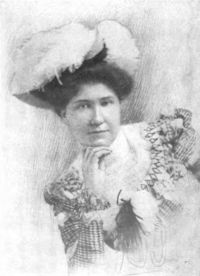
Portrait of Carolyn Wells Carolyn Wells More Lives Than One — XVII. The Truth About Locke (1923)

I was becoming more and more Tommy Locke and less and less Andrew Barham. I began to realize that I had gone farther than I intended—that I had burned bridges behind me that I never could rebuild. Time and again I tried to give up that other life—tried to resolve to close up the studio and never go back to it. I kept things arranged that way—there was always money enough in Charley’s possession to pay all bills and settle up all claims, if I could conclude to give up the other life I led.
Source: Wikisource

Portrait of Carolyn Wells Carolyn Wells More Lives Than One — XVII. The Truth About Locke (1923)

If you will think it over as I detail my arguments, I am sure you’ll be convinced.”
“Go ahead.”
“To begin with, it would be practically impossible for a man to disappear so utterly off the face of the earth, as Locke seems to have done. With a large reward offered for his apprehension, no man could hide his personality so long and so cleverly and escape all discovery or detection. But, aside from that, I have proved my case to my own satisfaction, as I am sure I can prove it to yours.”
“I’m trying to grasp it. But, before anything else, why would Andrew Barham cut up any such trick as that?
Source: Wikisource

Portrait of Carolyn Wells Carolyn Wells More Lives Than One — XVII. The Truth About Locke (1923)

All he wanted was a different personality for the artist that should in no way resemble the real Andrew Barham. He never expected to meet the same people in his two separate walks of life. And so, he went his way in his Fifth Avenue surroundings, and occasionally, when he chose, he went away, down to Washington Square for a day or two. His frequent absences from the studio, and also, from his Barham home, are thus explained.
Source: Wikisource

Get perspective with Kwize: daily news enlightened by great literature