Fifth Avenue

Definition and stakes

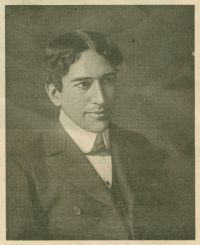
Portrait of Sir C. H. Reilly Sir C. H. Reilly Some architectural problems of to-day (1924)

It is not only the vast scale of the street as measured by its width, which seems enormous when one looks at the sea of traffic, but which seems narrow when one looks at the towering buildings, nor the beauty of those buildings or the delicacy of their detail that give Fifth Avenue its peculiar character and interest. Without the great masses of well-dressed men and women which crowd its wide pavements all day long it would seem dull and heavy.
Source: Gutenberg

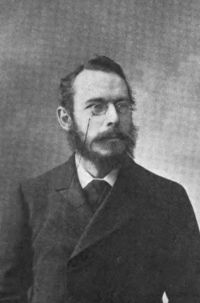
Portrait of Sir C. H. Reilly Sir C. H. Reilly Some architectural problems of to-day (1924)

There are no continuous roofs—indeed, very few roofs at all to be seen. In a sense, therefore, it is not a street at all, only a collection of buildings, just as a checker-board town, like most of New York, is not really a town at all, but only a collection of city blocks. Unity of some sort, some continuous thought or character, is required for both. It is this lack of unity which makes Fifth Avenue at once so exciting and so tiring. One never knows what to expect, there is no place for the eye to rest without distraction. If the individual buildings were bad the streets would be a nightmare.
Source: Gutenberg

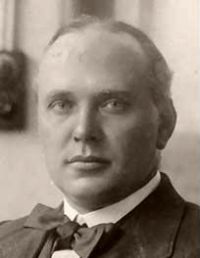
Portrait of Arthur Bartlett Maurice Arthur Bartlett Maurice Fifth Avenue

It was their type of house that was accepted for the neighbourhood as the first streets began to open to the right and left of Fifth Avenue. That northern stretch of the Square, first invaded in fiction by Henry James, has ever been a favourite background of the story-spinners, who never tire of contrasting its tone of well-bred aristocracy with the squalor, half-Bohemian and half-proletarian, that faces it from across the Park. In fiction one does not necessarily have to be of an old New York family in order to inhabit one of those north-side dwellings.
Source: Gutenberg

Get perspective with Kwize: daily news enlightened by great literature