Summary

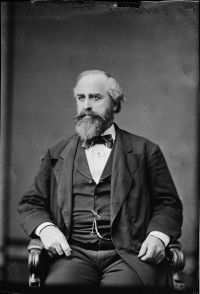
Portrait of Carter H. Harrison Carter H. Harrison A Summer's Outing, and The Old Man's Story

One can wander in pretty pine woods on gentle slopes; can drive or ride along well-graveled roads through the National Park, now along limpid streams, then on winding curves or mounting by zig-zag bold rocky heights; can bathe in porcelain tubs filled by hot mineral waters just from plutonic laboratories far below the mountain's foundations, and then sweat in soft blankets almost as white as snow, or can by a tunnel through lava rocks reach a grotto or cave scooped out by agencies of hot water—a veritable gothic room in the rock, lighted dimly from a small aperture in the apex.
Source: Gutenberg

Portrait of Carter H. Harrison Carter H. Harrison A Summer's Outing, and The Old Man's Story

One feels that mountains of secondary rocks are a mass of tiny things thrown aloft as the creation of other than their own powers. They may tower far above the snow line, and may pierce the vaulted sky with their sharp needles and tooth like pinnacles in the silent regions of eternal ice; but we know that their loftiest horns once lay beneath the ocean's wave, and after being hoisted as an impotent mass, have been cut and fashioned into sharpness by the gnawing tooth of frost.
Source: Gutenberg

Portrait of Carter H. Harrison Carter H. Harrison A Summer's Outing, and The Old Man's Story

Nature's ways are very queer, and it seems to permit more inconceivable things to be done by its creatures beneath the water than upon the land. A fish disporting itself in a limpid stream or gently propelling itself deep down in the transparent sea, appears to be absolutely enjoying existence—to be reveling in his "dolce far niente," and yet it would seem that the whole finny family is spawned to bear the whips and spurs of most cruel fate. From the instant a little fellow emerges from the egg up to his fullest growth, he is always on the ragged edge of some bigger fish's maw.
Source: Gutenberg

Get perspective with Kwize: daily news enlightened by great literature