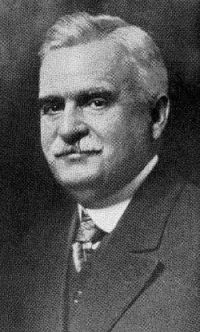
Charles DeLano Hine

Charles DeLano Hine

Summary

Portrait of Charles DeLano Hine Charles DeLano Hine Letters from an old railway official… (1912)

THE CHIEF OF STAFF IDEA.
San Antonio, Texas, May 20, 1911. My Dear Boy:—Let me tell you something about a wonderfully effective human machine, the Confederate Army. I sit facing a Confederate monument which depicts a self-reliant son of the Southland, the type of man real railway training helps to perpetuate. Hard by is a shrine to valor, the Alamo, a reminder of the duty of altruism which an individual owes to his fellows.
Source: Wikisource

Portrait of Charles DeLano Hine Charles DeLano Hine Letters from an old railway official… (1912)

Speaking of yards, see if you have not some bright fellows on your staff who can figure out a car record that can be taken by the mechanical men, the car inspectors, that will answer all the purposes of transportation, including claims. Instead of two sets of specialists, car inspectors and yard clerks, partly duplicating each other’s work, see if you cannot develop one set of all ’round men with some interchangeability of function. No, you cannot do it all at once. Even if you have a workable scheme it will take a long time to establish.
Source: Wikisource

Portrait of Charles DeLano Hine Charles DeLano Hine Letters from an old railway official… (1912)

For, my boy, the unit system of organization on the Harriman Lines, of which you have read more or less, is primarily a substitution of the modern chief of staff idea for the grown, dwarfing, irrational government by chief clerks. [1]
The unit system of organization requires that an official, whether the head of the unit or an assistant, shall, when absent on the line, be represented at headquarters by the senior or chief assistant of the unit. Such senior or chief assistant is in effect, though not in name, the chief of staff.
Source: Wikisource

Get perspective with Kwize: daily news enlightened by great literature