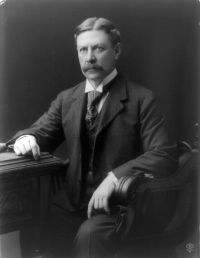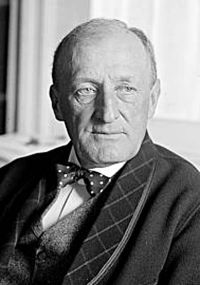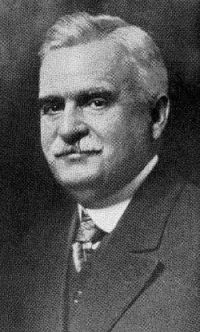
Charles DeLano Hine

Biographical details

Portrait of Charles DeLano Hine Charles DeLano Hine,  Letters from an old railway official… (1912)

“ Is not an emergency a test of a system, a proof of its elasticity? Can we develop the highest efficiency of superintendents when we, the executive and general officers, place upon them the burden of departing from a system that fails to meet their practical problems? Is it not a species of unconscious administrative cowardice for boards of directors to impose implied and practical responsibility without conferring corresponding authority? Can such questions be ignored as exceptional, trifling, and captious? Do they not reach to the heart of railway organization and efficiency? ”
Source: Wikisource

Portrait of Charles DeLano Hine Charles DeLano Hine,  Letters from an old railway official… (1904)

“ Like the ostrich, believing itself hidden with its head stuck in the sand, we feel that if we call them committees of our employes we are not recognizing the union. Is this consistent? We claim, and justly so, that a high principle is involved; that if we recognize the union we practically force every man to join, regardless of his own inclinations and of his freedom as an American citizen. This is sound doctrine, but its application is very faulty. Our spirit may be willing, but our flesh is damnably weak. Do we give the non-union man a show for his white alley? ”
Source: Wikisource

Portrait of Charles DeLano Hine Charles DeLano Hine,  Letters from an old railway official… (1912)

“ So, both rationally and empirically, by reason and by costly experiment, came the corporation to beat Death at his own game. Like all progress the corporation was resisted, because in the divine scheme of things the radicals never long outnumber the conservatives. Like all real progress the corporation idea won because it was needed. The corporation, whether governmental, religious, industrial or commercial, marks a distinct advance from feudalism by protecting the rights of the many against the caprice of the few. Because we have moved so fast might has often seemed to be right. ”
Source: Wikisource

Get perspective with Kwize: daily news enlightened by great literature