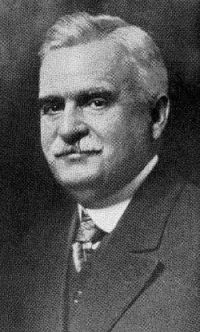
Charles DeLano Hine

Charles DeLano Hine

Summary

Portrait of Charles DeLano Hine Charles DeLano Hine Letters from an old railway official… (1912)

Stock, perishable freight and merchandise must have rapid movement. Is it wise under such a disparity of conditions to make the train-mile rigid and sacred? Why not pay men by the hour, with a monthly guarantee, and run trains sometimes light and sometimes heavy, sometimes fast and sometimes slow, to meet actual controlling conditions of traffic? When business happened to be light, equipment plentiful, and terminals open we would penalize ourselves in wages for slower movement, but would save in fuel, in engine house expense, etc.
Source: Wikisource

Portrait of Charles DeLano Hine Charles DeLano Hine Letters from an old railway official… (1912)

Have you not seen cars pulled to pieces in big trains, have you not seen freight delayed in a manner to suggest to an innocent bystander that the road was perhaps running its last train and giving its cars their last load?
The inevitable tendency of the big train is to hold back and combine in large lots cars destined to the same point and to the same consignee. When a whole train can be unloaded at the ship’s side at tidewater, or at a large consuming plant, the system is ideal.
Source: Wikisource

Portrait of Charles DeLano Hine Charles DeLano Hine Letters from an old railway official… (1912)

A railroad train cannot move regardless of all other trains on the road. Such independence of function will cause either a criminal collision or an expensive blockade. A train must, therefore, move according to a time-table and orders. The space occupied by a train, unlike a stationary machine, is so variable that time becomes the essence of the proposition. The train crew cannot be allowed that freedom of action which permits of piece work.
Source: Wikisource

Get perspective with Kwize: daily news enlightened by great literature