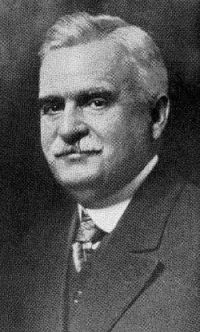
Charles DeLano Hine

Charles DeLano Hine

Summary

Portrait of Charles DeLano Hine Charles DeLano Hine Letters from an old railway official… (1904)

We cannot stop killing people to-day or to-morrow, this year or next. The problem is not as easy for us as for the oft cited English railways. Their block signals are a coincidence, not a prime cause of their safer operation. Much of our mileage has only a speculator’s or a promoter’s excuse for existence. Much of our traffic is so thin that English thoroughness would put a part of our lines out of business, much to our relief, but much to the intolerance of the public.
Source: Wikisource

Portrait of Charles DeLano Hine Charles DeLano Hine Letters from an old railway official… (1904)

Public opinion is aroused on the subject of our failure to safeguard human life in proportion to our progress in other matters. We must cough up the money for more block signals. I say block signals, not because they are the panacea for the evil that many people imagine, but because they are the best safeguard yet devised. They are useless without proper discipline and supervision.
Source: Wikisource

Portrait of Charles DeLano Hine Charles DeLano Hine Letters from an old railway official… (1904)

We are realizing that it is not necessary to kill an engineman who runs past a signal. The money that such unnecessary derailments have cost might better have been spent in enforcing discipline by increased official supervision. If main track derails were proper for an interlocking plant, it would logically follow that every block signal should be interlocked with a derail. Desirable as they are on auxiliary low-speed routes, it is doubtful if derails have any place in a main track, even at drawbridges. We are learning, too, that a good derail can be installed without cutting the rail.
Source: Wikisource

Get perspective with Kwize: daily news enlightened by great literature