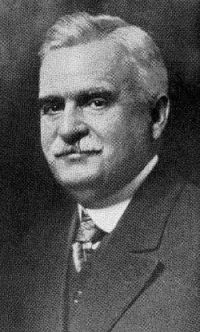
Charles DeLano Hine

Charles DeLano Hine

Summary

Portrait of Charles DeLano Hine Charles DeLano Hine Letters from an old railway official… (1904)

Another reason given is that our officials are too far away to give the coal wharves proper supervision. As a matter of fact the official is on hand about as frequently as the contractor. This is a sad commentary on the versatility and elasticity of our organization. Before throwing money to the contractors why not give our section foreman or our agent a bonus for supervising the coal heavers? Let our men be a little interchangeable. If a man becomes worn out from too much sun on the track, let the breeze blow through his whiskers in the coal shed for a few weeks.
Source: Wikisource

Portrait of Charles DeLano Hine Charles DeLano Hine Letters from an old railway official… (1904)

The term company train perhaps comes the nearest to a comprehensive designation. As a tentative proposition, to be modified by experience, I think I would distribute one-half of the expense of the train to supply, the other half to inspection and consider both halves as money well spent. With the enormous growth of business, with the increasing expansion of systems, we have had to leave more and more to departments. The result is that each department becomes more and more forgetful of the others. It isn’t enough to have the heads at the general offices take lunch together.
Source: Wikisource

Portrait of Charles DeLano Hine Charles DeLano Hine Letters from an old railway official… (1904)

Every once in a while we lose a good man from the service because he is hard pressed and can raise money only by taking his time check.
The monthly payroll was adopted before bonding and surety companies revolutionized business methods. The theory is that the roll must be approved and audited before payment in order to insure accuracy and prevent fraud. Did you ever hear of a payroll being disapproved as such? No matter how unwise their employment, how injudicious the time put in, the men must be paid. We are under moral and legal obligations to pay for service performed.
Source: Wikisource

Get perspective with Kwize: daily news enlightened by great literature