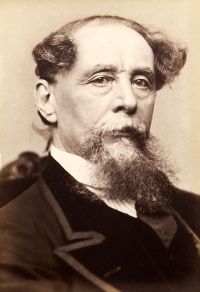
Charles Dickens

Charles Dickens

Summary

Portrait of Charles Dickens Charles Dickens,  Barnaby Rudge — Chapter 73 (1841)

“ If you and I and he could die together, there would be none to feel sorry, or to grieve for us. But do what they will, I don’t fear them, mother!’
‘They will not harm you,’ she said, her tears choking her utterance. ‘They never will harm you, when they know all. I am sure they never will.’
‘Oh! Don’t be too sure of that,’ cried Barnaby, with a strange pleasure in the belief that she was self-deceived, and in his own sagacity. ‘They have marked me from the first. I heard them say so to each other when they brought me to this place last night; and I believe them. Don’t you cry for me.
”
Source: Wikisource

Portrait of Charles Dickens Charles Dickens,  Barnaby Rudge — Chapter 73 (1841)

“ Barnaby recoiled in horror, and glancing at his stained wrist for an instant, wrapped it, shuddering, in his dress.
‘But,’ she added hastily as the key turned in the lock, ‘although we shun him, he is your father, dearest, and I am his wretched wife. They seek his life, and he will lose it. It must not be by our means; nay, if we could win him back to penitence, we should be bound to love him yet. Do not seem to know him, except as one who fled with you from the jail, and if they question you about him, do not answer them. God be with you through the night, dear boy!
”
Source: Wikisource

Portrait of Charles Dickens Charles Dickens,  Barnaby Rudge — Chapter 73 (1841)

“ It said ‘Nobody,’ as plainly as a croak could speak.
‘Who cares for Grip, except you and me?’ said Barnaby, smoothing the bird’s rumpled feathers with his hand. ‘He never speaks in this place; he never says a word in jail; he sits and mopes all day in his dark corner, dozing sometimes, and sometimes looking at the light that creeps in through the bars, and shines in his bright eye as if a spark from those great fires had fallen into the room and was burning yet.
”
Source: Wikisource

Get perspective with Kwize: daily news enlightened by great literature