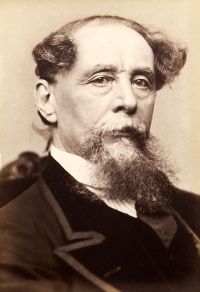
Charles Dickens

Charles Dickens

Summary

Portrait of Charles Dickens Charles Dickens,  Barnaby Rudge — Chapter 66 (1841)

“ Such were the accounts brought to the old vintner by his servants as he sat at the side of Mr Haredale’s bed, having been unable even to doze, after the first part of the night; too much disturbed by his own fears; by the cries of the mob, the light of the fires, and the firing of the soldiers. Such, with the addition of the release of all the prisoners in the New Jail at Clerkenwell, and as many robberies of passengers in the streets, as the crowd had leisure to indulge in, were the scenes of which Mr Haredale was happily unconscious, and which were all enacted before midnight. ”
Source: Wikisource

Portrait of Charles Dickens Charles Dickens,  Barnaby Rudge — Chapter 66 (1841)

“ Feeling that he might have anticipated this occurrence, after what he had seen at Chigwell in the morning, where no man dared to touch a spade, though he offered a large reward to all who would come and dig among the ruins of his house, he walked along the Strand; too proud to expose himself to another refusal, and of too generous a spirit to involve in distress or ruin any honest tradesman who might be weak enough to give him shelter. ”
Source: Wikisource

Portrait of Charles Dickens Charles Dickens,  Barnaby Rudge — Chapter 66 (1841)

“ That thereupon, and daunted by the shrieks and tumult, the crowd began to disperse, and the soldiers went away, leaving the killed and wounded on the ground: which they had no sooner done than the rioters came back again, and taking up the dead bodies, and the wounded people, formed into a rude procession, having the bodies in the front. That in this order they paraded off with a horrible merriment; fixing weapons in the dead men’s hands to make them look as if alive; and preceded by a fellow ringing Lord Mansfield’s dinner-bell with all his might. ”
Source: Wikisource

Get perspective with Kwize: daily news enlightened by great literature