Summary

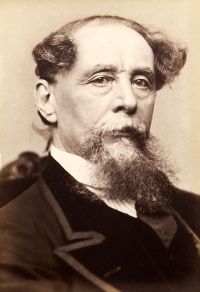
Portrait of Charles Dickens Charles Dickens Bleak House — Chapter III: A Progress (1852)

I felt the distance between my godmother and myself so much more after the birthday, and felt so sensible of filling a place in her house which ought to have been empty, that I found her more difficult of approach, though I was fervently grateful to her in my heart, than ever. I felt in the same way towards my school companions; I felt in the same way towards Mrs. Rachael, who was a widow; and oh, towards her daughter, of whom she was proud, who came to see her once a fortnight! I was very retired and quiet, and tried to be very diligent.
Source: Wikisource

Portrait of Charles Dickens Charles Dickens Bleak House — Chapter III: A Progress (1852)

And so we came, along a passage, into a comfortable sort of room where a young lady and a young gentleman were standing near a great, loud-roaring fire. A screen was interposed between them and it, and they were leaning on the screen, talking.
They both looked up when I came in, and I saw in the young lady, with the fire shining upon her, such a beautiful girl! With such rich golden hair, such soft blue eyes, and such a bright, innocent, trusting face!
“Miss Ada,” said Mr. Kenge, “this is Miss Summerson.”
Source: Wikisource

Portrait of Charles Dickens Charles Dickens Bleak House — Chapter III: A Progress (1852)

It almost makes me cry to think what a relief it used to be to me when I came home from school of a day to run upstairs to my room and say, “Oh, you dear faithful Dolly, I knew you would be expecting me!” and then to sit down on the floor, leaning on the elbow of her great chair, and tell her all I had noticed since we parted. I had always rather a noticing way—not a quick way, oh, no!—a silent way of noticing what passed before me and thinking I should like to understand it better. I have not by any means a quick understanding. When I love a person very tenderly indeed, it seems to brighten.
Source: Wikisource

Get perspective with Kwize: daily news enlightened by great literature