Charles Dickens

Charles Dickens

Summary

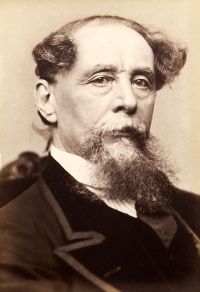
Portrait of Charles Dickens Charles Dickens Little Dorrit — Book 2, Chapter 9 (1857)

Because, dear me! a person’s thoughts,’ Mrs Tickit said this with an argumentative and philosophic air, ‘however they may stray, will go more or less on what is uppermost in their minds. They will do it, sir, and a person can’t prevent them.’
Arthur subscribed to this discovery with a nod.
‘You find it so yourself, sir, I’ll be bold to say,’ said Mrs Tickit, ‘and we all find it so. It an’t our stations in life that changes us, Mr Clennam; thoughts is free!—As I was saying, I was thinking of one thing and thinking of another, and thinking very much of the family.
Source: Wikisource

Portrait of Charles Dickens Charles Dickens Little Dorrit — Book 2, Chapter 9 (1857)

Within a few hours the cottage furniture began to be wrapped up for preservation in the family absence—or, as Mr Meagles expressed it, the house began to put its hair in papers—and within a few days Father and Mother were gone, Mrs Tickit and Dr Buchan were posted, as of yore, behind the parlour blind, and Arthur’s solitary feet were rustling among the dry fallen leaves in the garden walks.
Source: Wikisource

Portrait of Charles Dickens Charles Dickens Little Dorrit — Book 2, Chapter 9 (1857)

It’s undeniably a long way off, Arthur, and a strange place for the poor love under all the circumstances. Let her be as well cared for as any lady in that land, still it is a long way off. just as Home is Home though it’s never so Homely, why you see,’ said Mr Meagles, adding a new version to the proverb, ‘Rome is Rome, though it’s never so Romely.’
‘All perfectly true,’ observed Arthur, ‘and all sufficient reasons for going.’
‘I am glad you think so; it decides me.
Source: Wikisource

Get perspective with Kwize: daily news enlightened by great literature