Summary

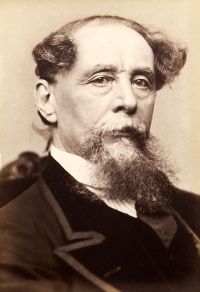
Portrait of Charles Dickens Charles Dickens Sketches by Boz — Horatio Sparkins (1836)

The young ladies simpered.
Man,’ replied Horatio, ‘man, whether he ranged the bright, gay, flowery plains of a second Eden, or the more sterile, barren, and I may say, commonplace regions, to which we are compelled to accustom ourselves, in times such as these; man, under any circumstances, or in any place—whether he were bending beneath the withering blasts of the frigid zone, or scorching under the rays of a vertical sun—man, without woman, would be—alone.’
‘I am very happy to find you entertain such honourable opinions, Mr. Sparkins,’ said Mrs. Malderton.
‘And I,’ added Miss Teresa.
Source: Wikisource

Portrait of Charles Dickens Charles Dickens Sketches by Boz — Horatio Sparkins (1836)

Frederick Malderton, looking profound.
‘I say, we know that we exist,’ repeated Horatio, raising his voice, ‘but there we stop; there, is an end to our knowledge; there, is the summit of our attainments; there, is the termination of our ends. What more do we know?’
‘Nothing,’ replied Mr. Frederick—than whom no one was more capable of answering for himself in that particular. Tom was about to hazard something, but, fortunately for his reputation, he caught his father’s angry eye, and slunk off like a puppy convicted of petty larceny.
Source: Wikisource

Portrait of Charles Dickens Charles Dickens Sketches by Boz — Horatio Sparkins (1836)

Flamwell was one of those gentlemen of remarkably extensive information whom one occasionally meets in society, who pretend to know everybody, but in reality know nobody. At Malderton’s, where any stories about great people were received with a greedy ear, he was an especial favourite; and, knowing the kind of people he had to deal with, he carried his passion of claiming acquaintance with everybody, to the most immoderate length.
Source: Wikisource

Get perspective with Kwize: daily news enlightened by great literature