Summary

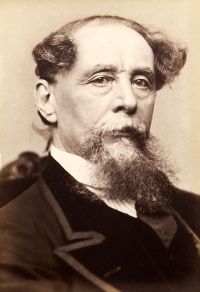
Portrait of Charles Dickens Charles Dickens The Mystery of Edwin Drood — Chapter XI (1870)

Behind the most ancient part of Holborn, London, where certain gabled houses some centuries of age still stand looking on the public way, as if disconsolately looking for the Old Bourne that has long run dry, is a little nook composed of two irregular quadrangles, called Staple Inn. It is one of those nooks, the turning into which out of the clashing street, imparts to the relieved pedestrian the sensation of having put cotton in his ears, and velvet soles on his boots.
Source: Wikisource

Portrait of Charles Dickens Charles Dickens The Mystery of Edwin Drood — Chapter XI (1870)

And I am besides totally unacquainted with the habits of birds, except the birds of Staple Inn, who seek their nests on ledges, and in gutter-pipes and chimneypots, not constructed for them by the beneficent hand of Nature. I beg, therefore, to be understood as foregoing the bird's-nest. But my picture does represent the true lover as having no existence separable from that of the beloved object of his affections, and as living at once a doubled life and a halved life.
Source: Wikisource

Portrait of Charles Dickens Charles Dickens The Mystery of Edwin Drood — Chapter XI (1870)

Grewgious, at length, with his eyes on the fire.
Edwin nodded assent, with his eyes on the fire.
"And let him be sure that he trifles with no one," said Mr. Grewgious; "neither with himself, nor with any other."
Edwin bit his lip again, and still sat looking at the fire.
"He must not make a plaything of a treasure. Woe betide him if he does! Let him take that well to heart," said Mr. Grewgious.
Source: Wikisource

Get perspective with Kwize: daily news enlightened by great literature