Summary

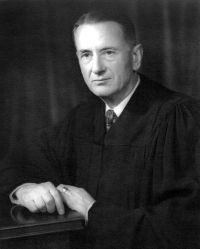
Portrait of Charles Evans Whittaker Charles Evans Whittaker Hoffman v. Blaski Sullivan — Opinion of the Court

They argue that in the interim between the bringing of the action and the filing of a motion to transfer it, the defendants may move their residence to, or, if corporations, may begin the transaction of business in, some other district, and, if such is done, the phrase 'where it might have been brought' should be construed to empower the District Court to transfer the action, on motion of the defendants, to such other district
Source: Wikisource

Portrait of Charles Evans Whittaker Charles Evans Whittaker Hoffman v. Blaski Sullivan — Opinion of the Court

Respondents objected to the transfer on the ground that, inasmuch as the defendants were not incorporated in or licensed to do or doing business in, and could not be served with process in, the district of Utah, the courts of that district lacked venue over the action [6] and ability to command jurisdiction over the defendants; [7] that therefore that district was not a forum in which the respondents had a right to bring the action, and, hence, the court was without power to transfer it to that district.
Source: Wikisource

Portrait of Charles Evans Whittaker Charles Evans Whittaker Hoffman v. Blaski Sullivan — Opinion of the Court

We do not agree. We do not think the § 1404 (a) phrase 'where it might have been brought' can be interpreted to mean, as petitioners' theory would required, 'where it may now be rebrought, with defendants' consent.' This Court has said, in a different context, that § 1404 (a) is 'unambiguous, direct (and) clear,' Ex parte Collett, 337 U.S. at page 58, 69 S.Ct.
Source: Wikisource

Get perspective with Kwize: daily news enlightened by great literature