Summary

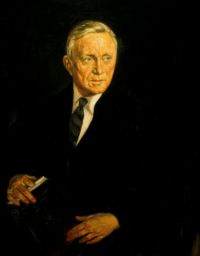
Portrait of William O. Douglas William O. Douglas Freeman v. Bee Machine Company…

But in the case of a natural person, he can be 'found' not metaphorically but physically. And when a person is not actually physically present in a place, he is not, 'so to speak', 'found' there except in the world of Alice in Wonderland.
The case therefore reduces itself to this: if the petitioner had not removed the action for breach of contract to the federal court, he could not possibly be compelled to defend a suit under the anti-trust laws brought against him in Massachusetts.
Source: Wikisource

Portrait of William O. Douglas William O. Douglas Freeman v. Bee Machine Company…

By removing a suit to the federal court a defendant is subjected to a liability-namely, to be sued in a district where he is neither a resident nor found. under a statute providing that he can be sued only where he is either a resident or found-from which he would be free if he remained in the state court. In other words, the right of removal is curtailed by depriving a defendant of territorial immunities from suit given by Congress in the enforcement of federal statutes, presumably because it deemed place for suit important in a country having the dimensions of a continent.
Source: Wikisource

Portrait of William O. Douglas William O. Douglas Freeman v. Bee Machine Company…

Rule 82 explicitly provides that 'These rules shall not be construed to extend or limit the jurisdiction of the district courts of the United States or the venue of actions therein.' Because causes of action could be joined, if properly brought, does not prove that they are properly brought. A liberal rule regarding joinder of actions does not eliminate the problems of suability created by the various venue provisions. The removal statute itself does not impliedly repeal the multitudinous venue restrictions imposed by Congress.
Source: Wikisource

Get perspective with Kwize: daily news enlightened by great literature