Summary

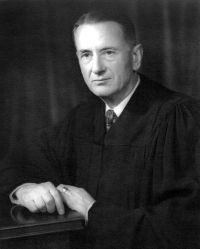
Portrait of Charles Evans Whittaker Charles Evans Whittaker United States v. Robinson — Opinion of the Court

It follows that the plain words, the judicial interpretations, and the history, of Rule 45 (b) not only fail to support, but actually oppose, the conclusion of the Court of Appeals, and therefore its judgment cannot stand.
That powerful policy arguments may be made both for and against greater flexibility with respect to the time for the taking of an appeal is indeed evident. But that policy question, involving, as it does, many weighty and conflicting considerations, must be resolved through the rule-making process and not by judicial decision.
Source: Wikisource

Portrait of Charles Evans Whittaker Charles Evans Whittaker United States v. Robinson — Opinion of the Court

If, by that process, the courts are ever given power to extend the time for the filing of a notice of appeal upon a finding of excusable neglect, it seems reasonable to think that some definite limitation upon the time within which they might do so would be prescribed; for otherwise, as under the decision of the court below, many appeals might-almost surely would-be indefinitely delayed.
Source: Wikisource

Portrait of Charles Evans Whittaker Charles Evans Whittaker United States v. Robinson — Opinion of the Court

When an act is required or allowed to be done at or within a specified time, the court for cause shown may at any time in its discretion (1) with or without motion or notice, order the period enlarged if application therefor is made before the expiration of the period originally prescribed or as extended by a previous order or (2) upon motion permit the act to be done after the expiration of the specified period if the failure to act was the result of excusable neglect
Source: Wikisource

Get perspective with Kwize: daily news enlightened by great literature