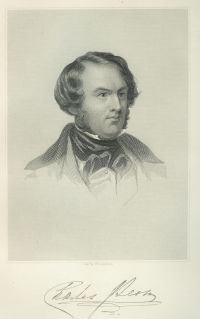
Charles James Lever

Charles James Lever

Summary

Portrait of Charles James Lever Charles James Lever Barrington. Volume 1 (of 2)

As I grew older, and the rod usurped the place of the hunting-whip, I grew to fancy that your angler would be the truest type of a companion; and if you but knew,” added he, as a glassy fulness dulled his eyes, “what a flattery it is to an old fellow when a young one will make a comrade of him,—what a smack of bygone days it brings up, and what sunshine it lets in on the heart,—take my word for it, you young fellows are never so vain of an old companion as we are of a young one! What are you so thoughtful about?”
“I was thinking how I was to make this explanation to Miss Barrington.”
Source: Gutenberg

Portrait of Charles James Lever Charles James Lever Barrington. Volume 1 (of 2)

Will you allow me to offer you such knowledge as I possess of India, to aid your suit? Will you associate me, in fact, with your cause? No higher one could there be than the vindication of a brave man's honor.”
“I thank you with all my heart and soul!” cried the old man, grasping his hand. “In my own name, and in that of my poor dear granddaughter, I thank you.”
“Oh, then, Colonel Barrington has left a daughter? I was not aware of that,” said Stapylton, with a certain coldness.
“And a daughter who knows no more of this suit than of our present discussion of it,” said Withering.
Source: Gutenberg

Portrait of Charles James Lever Charles James Lever Barrington. Volume 1 (of 2)

How readily do we associate it with some incident of sorrow! The watcher beside the sick-bed rises to the mind, or the patient sufferer himself trying to cheat the dull hours by a book, or perhaps some poor son of toil arising to his daily round of labor, and seated at that solitary meal which no kind word enlivens, no companionship beguiles. And as I write, in what corner of earth are not such scenes passing,—such dark shadows moving over the battlefield of life?
In such a feeling did Conyers watch this light as, leaving the high-road, he took a path that led along the river towards it.
Source: Gutenberg

Get perspective with Kwize: daily news enlightened by great literature