Dill

Definition and stakes

C. C. Stopes,  Shakespeare's environment (1914)

“ It is also possible that some specimens of dill, or of daffodils, frequently called dillies, grew there abundantly. The [Pg 215] churchwardens’ clerk of St. Martin’s-in-the-Fields, in early years, carefully dissociated the parts of the word as “Pick a dilly.” It remains at least a fact for us that the word as a place name first enters literature associated neither with collars, tailors, nor gaming-houses, but with the botanist John Gerard, who found the blue buglosse “growing in a dry Ditch at Pickadilla” some time before 1633. ”

Source: Gutenberg

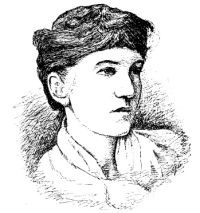
Portrait of Walter Crane Walter Crane,  The Baby's Opera

“ Cry dilly, dilly, dilly, dilly, come and be killed,
For you must be stuffed, and my customers filled!”
3. “I have been to the ducks that are swimming in the pond,
And they won’t come to be killed, Mrs. Bond;
I cried dilly, dilly, dilly, dilly, come and be killed,
For you must be stuffed, and the customers filled!”
4. Mrs. Bond she went down to the pond in a rage,
With plenty of onions, and plenty of sage;
She cried, “Come, little wag-tails, come, and be killed.
For you shall be stuffed, and my customers filled!”
29
30
XMAS DAY IN Ye MORNING [Listen] [PDF] [MusicXML]
1.
”
Source: Gutenberg

1911 Encyclopædia Britannica, Volume 8… (1911)

“ The young plants should be thinned when 3 or 4 weeks old, so as to be at distances of about 10 in. A sheltered spot and dry soil are needed for the production of the seed in the climate of England. The leaves of the dill are used in soups and sauces, and, as well as the umbels, for flavouring pickles. The seeds are employed for the preparation of dill-water and oil of dill; they are largely consumed in the manufacture of gin, and, when ground, are eaten in the East as a condiment. The British Pharmacopoeia contains the Aqua Anethi or dill-water (dose 1-2 oz.) ”
Source: Wikisource

Get perspective with Kwize: daily news enlightened by great literature