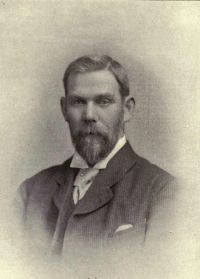
Charles Dixon

Charles Dixon

Summary

Portrait of Charles Dixon Charles Dixon British Sea Birds

Few sights in the bird-world are prettier than a colony of disturbed Gulls during the breeding season. As their haunts are invaded, the frightened birds rise in fluttering thousands, drifting to and fro like a snowstorm, in which each flake is a startled bird. The noisy din, the rush of wings, the swooping, soaring, fluttering Gulls, the ground strewn with nests—all combine to form a picture in the mind that time can never efface! The eggs of this Gull are usually three in number, sometimes as many as four. They vary to an almost incredible degree.
Source: Gutenberg

Portrait of Charles Dixon Charles Dixon British Sea Birds

Then comes by far the prettiest sight of all, as the bird swims through each mighty wave just before it turns over and breaks upon the beach, floating light as a foam fleck on the huge rollers, now high up on the white crests, then momentarily lost to view in the green glassy depths. If alarmed on these occasions, the Eider generally swims quickly out from shore, but if further pursued or fired at, it instantly takes wing, rising from the water with little splash, and flying rapidly and steadily just above the surface to a safer refuge.
Source: Gutenberg

Portrait of Charles Dixon Charles Dixon British Sea Birds

Between the tides Redshanks often collect on some mud-bank, where in a serried throng they keep up a confused babel of subdued cries, as if all were talking and none listening. Its flight is rapid and most unsteady looking—the black and white wings producing an idea of irregularity which is more imaginary than real. Upon the coast the Redshank feeds on sand-worms, crustaceans, molluscs, and such like marine creatures, but during summer at its breeding-grounds, worms, insects, ground-fruits and berries are among the substances sought.
Source: Gutenberg

Get perspective with Kwize: daily news enlightened by great literature