Summary

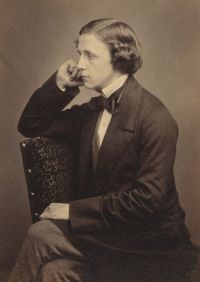
Portrait of Charles L. Dodgson Charles L. Dodgson The Principles of Parliamentary Representation (1884)

The method of 'cumulative voting' (where an Elector can give two or more votes to the same Candidate) will usually have no other effect than to increase the 'specific gravity'—so to speak—of a vote. Let each Elector have 4 votes, with permission to 'lump' them if he chooses, and in the end you will find most of the votes given in lumps of 4, and the result much the same as if each Elector had had one vote only.
Source: Wikisource

Portrait of Charles L. Dodgson Charles L. Dodgson The Principles of Parliamentary Representation (1884)

Assuming it to be agreed that each District is to return 2 or more Members, and that each Elector is to give one vote only, we have now to consider what is to be done when 2 or more Candidates of the same party have got, among them, enough votes to be returned, but when some have got more than the quota, and others less. It is obviously not fair that the party should fail in bringing in their rightful number of Members, merely by an accidental disarrangement of votes
Source: Wikisource

Portrait of Charles L. Dodgson Charles L. Dodgson The Principles of Parliamentary Representation (1884)

In the first case (a method that has been much advocated) it is only a bare majority in each District who are represented. For it must not be supposed that all who vote for a Member are duly represented by him. If a District contains 20,001 Electors, so that 10,001 are enough to return a Member, all additional votes are absolutely wasted: hence only 10,001 Electors in that District are represented in Parliament; the other 10,000, whether they vote for the successful Candidate, or for a rival, or even if there be no contest at all, are unrepresented.
Source: Wikisource

Get perspective with Kwize: daily news enlightened by great literature