Summary

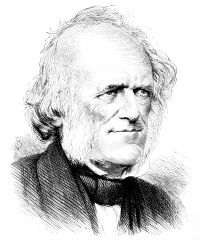
Portrait of Charles Lyell Charles Lyell Student's Elements of Geology…

How faint an idea does this exclamation of the poet convey of the real wonders of nature! for here we discover proofs that the calcareous and siliceous dust of which hills are composed has not only been once alive, but almost every particle, albeit invisible to the naked eye, still retains the organic structure which, at periods of time incalculably remote, was impressed upon it by the powers of life.
Source: Wikisource

Portrait of Charles Lyell Charles Lyell Student's Elements of Geology…

The absence of many fossil forms usually met with in marine strata, affords a useful negative indication of the fresh-water origin of a formation. For example, there are no sea-urchins, no corals, no chambered shells, such as the nautilus, nor microscopic Foraminifera in lacustrine or fluviatile deposits. In distinguishing the latter from formations accumulated in the sea, we are chiefly guided by the forms of the mollusca. In a fresh-water deposit, the number of individual shells is often as great as in a marine stratum, if not greater; but there is a smaller variety of species and genera.
Source: Wikisource

Portrait of Charles Lyell Charles Lyell Student's Elements of Geology…

Some fossil shells, even if simply attached to the OUTSIDE of others, bear full testimony to the conclusion above alluded to, namely, that an interval elapsed between the death of the creature to whose shell they adhere, and the burial of the same in mud or sand. The sea-urchins, or Echini, so abundant in white chalk, afford a good illustration. It is well known that these animals, when living, are invariably covered with spines supported by rows of tubercles.
Source: Wikisource

Get perspective with Kwize: daily news enlightened by great literature