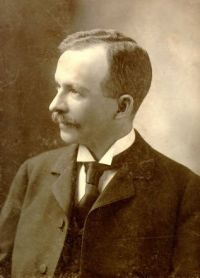
 Charles W. Chesnutt,
The House Behind the Cedars — XVIII
(1900)
Charles W. Chesnutt,
The House Behind the Cedars — XVIII
(1900)
“ She did not sympathize greatly with the new era opened up for the emancipated slaves; she had no ideal love of liberty; she was no broader and no more altruistic than the white people around her, to whom she had always looked up; and she sighed for the old days, because to her they had been the good days. Now, not only was her king dead, but the shield of his memory protected her no longer. Molly had lost one child, and his grave was visible from the kitchen window, under a small clump of cedars in the rear of the two-acre lot. ”
