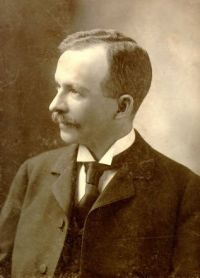
 Charles W. Chesnutt,
The House Behind the Cedars — XXIX
(1900)
Charles W. Chesnutt,
The House Behind the Cedars — XXIX
(1900)
“ Tryon was quite aware that by a surreptitious correspondence he ran some risk of compromising Rena. But he had felt, as soon as he had indulged his first opportunity to talk of her, an irresistible impulse to see her and speak to her again. He could scarcely call at her boarding-place,-- what possible proper excuse could a young white man have for visiting a colored woman? At the schoolhouse she would be surrounded by her pupils, and a private interview would be as difficult, with more eyes to remark and more tongues to comment upon it. ”
